
Reviewed · KUALA LUMPUR WALKING TOURS
Penang Island: Street Food Walking Tour
Penang’s best stories are often served in small portions. This 210-minute food walk begins at Chowrasta Market, moves through Georgetown’s Heritage Zone, and links old coffee shops, family stalls, Nyonya sweets, and street food with the communities that created them. The food is the hook, but the family stories give the tour its staying power.
I like the small group of no more than nine because it should be easier to hear the guide and ask questions at crowded food stops. I also like the care taken with portions: the guide gauges your appetite rather than piling on food you cannot finish.
The main drawback is that this is a walking tour through an active city, not a seated tasting session. You need comfortable shoes, breathable clothes, and enough stamina for three and a half hours. The activity is described as wheelchair accessible but also not suitable for people with mobility impairments, so ask for a clear route and access check before booking.
Key points to know before you book
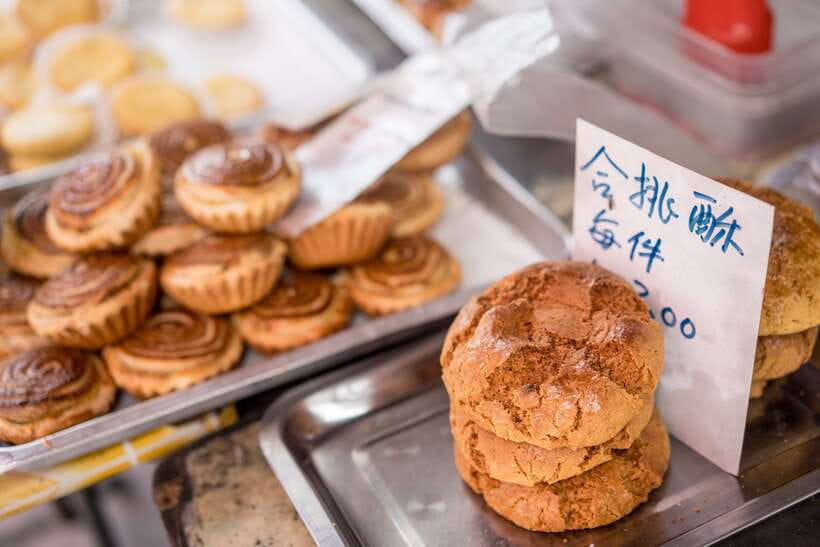
- Chowrasta Market dates to the 1890s: Start with Georgetown’s oldest market and see where Malay, Chinese, and Indian trade traditions meet.
- Ngor Ka Sai is the coffee surprise: This local drink combines coffee and Milo, making a sweet, malty variation on kopitiam coffee.
- A 50-year popiah tradition is shown by hand: You watch a family craft popiah skins, a practical skill that may soon be hard to find.
- Moh Teng Pheow focuses on Nyonya kuey: Learn how Baba and Nyonya food blends Chinese and Malay customs through cakes, dumplings, puddings, and pastries.
- Asam laksa gives the tour a strong savory stop: Penang’s version balances sweet, sour, and savory flavors in a way that differs from Kuala Lumpur’s.
- The group size keeps the food personal: With a limit of nine people, the guide can adjust portions and explain dishes without shouting over a large crowd.
Starting at Chowrasta Market in the 1890s
The tour starts at Chowrasta Market, the oldest market in Penang, with roots reaching back to the 1890s. That makes it a useful first stop because you are not simply entering a food hall built for sightseeing. You are beginning in a place shaped by daily trade and long-running family businesses.
The market brought Malay, Chinese, and Indian communities into regular contact. You will hear vendors speaking a mix of Hokkien, Malay, and Tamil, and you will see the everyday energy of a place that has fed Georgetown for generations.
This is where the guide sets up the larger point of the walk: Penang food is not one single cuisine. It grew from several communities living, trading, and cooking close together. The market helps you understand that before the tasting stops begin.
Come ready for noise, movement, and strong smells. Chowrasta is a working market, so you may have to stay close to the guide and watch your footing. The reward is a more useful introduction to Penang than beginning with a polished restaurant.
More Street Food Tours in Penang
- Penang Plates Food Tour with 15+ Tastings
★ 4.9 · 734 reviews - Good Morning Penang Food Tour with 15+ Tastings
★ 5.0 · 148 reviews - Penang: Trishaw Ride and Hawker Center Food Tour
★ 4.3 · 20 reviews
Kopitiam coffee and two bold local sweets
One of the first food lessons is kopitiam culture, the coffee-shop tradition that runs through Penang life. You will try Ngor Ka Sai, a local coffee mixed with Milo. It sounds unusual, but the combination gives you coffee’s roasted edge with Milo’s sweet, chocolate-like malt.
This is a good example of what the tour does well. Instead of presenting only famous dishes, it includes small local habits that can be easy to miss when you eat alone. The drink is also a low-risk tasting. If you like sweet coffee, you may enjoy it immediately. If you prefer black coffee, it may be more novelty than new favorite.
The nutmeg jeruk is another sharp turn. These Penang pickles wake up your mouth with a sweet, sour, and aromatic bite. They are useful before the heavier dishes because they refresh your palate and show how local produce becomes a snack with a long shelf life.
Then comes durian dodol, a sticky-sweet confection made with the king of fruits. Dodol has a dense, chewy texture, and the durian gives it a strong tropical aroma. This is not the place to hide from durian. You get a small, manageable way to try its flavor without committing to an entire fruit.
I appreciate this part of the walk because the portions can stay modest while the flavors remain memorable. You get contrast: coffee and Milo, sour pickle, then dense durian sweetness. Tell the guide about your appetite and food preferences early, since the tour is designed to avoid unnecessary portions.
Seeing popiah skins made by hand
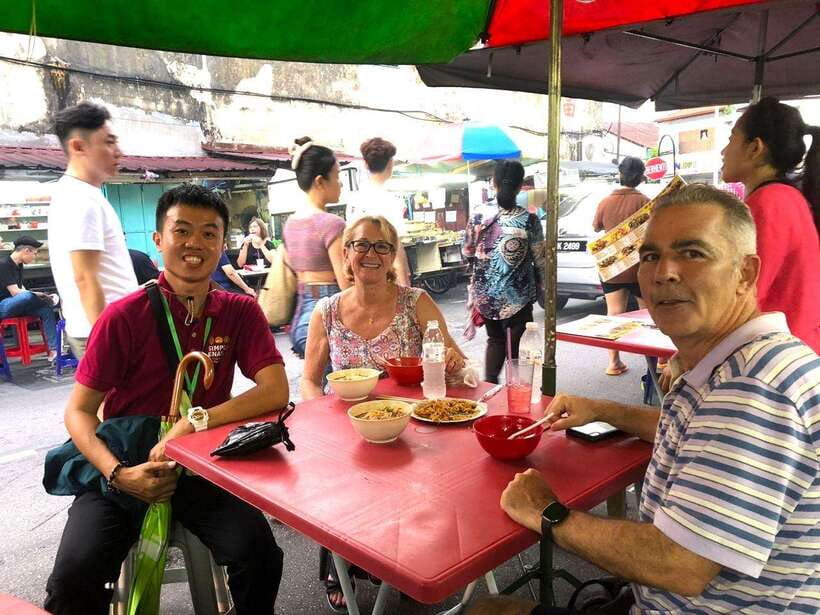
The handmade popiah demonstration is one of the tour’s most specific stops. You will watch a master whose family has made popiah skins by hand for 50 years.
Popiah is often discussed as a filled roll, but the wrapper is part of the craft. Seeing the skin made by hand lets you notice the work behind what might otherwise look like a simple snack. This is not just a tasting. It is a chance to see a food skill passed through a family.
That family connection matters in Penang, where many food traditions survive because individual vendors continue making them day after day. The guide can connect the technique to the wider story of disappearing skills and changing food habits.
The stop may appeal most to you if you like process as much as eating. If you want a tour made up only of large tastings, this demonstration will slow the pace. I think that pause improves the tour. It gives your palate a break and adds a human face to the food.
Walking through Georgetown’s Heritage Zone
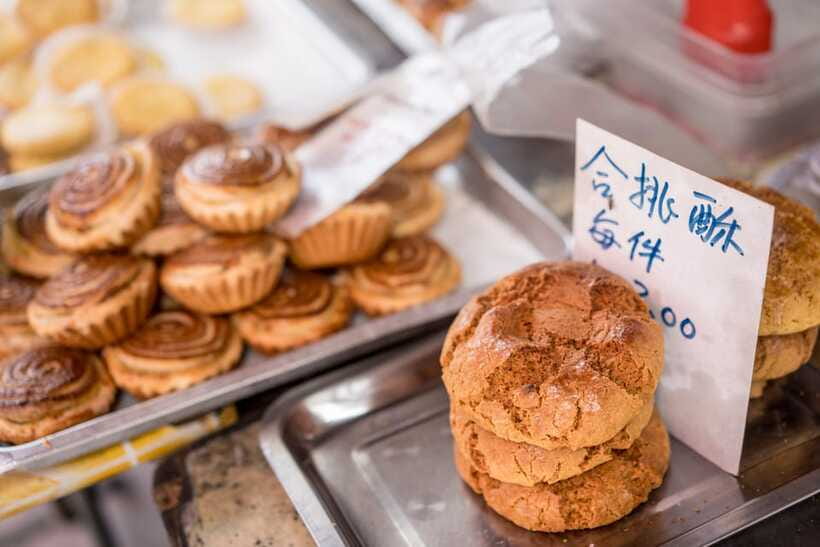
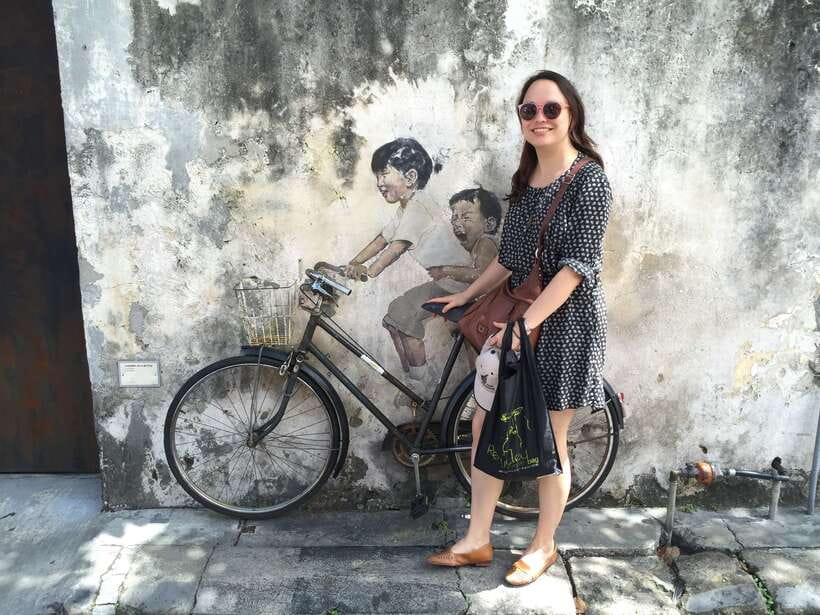
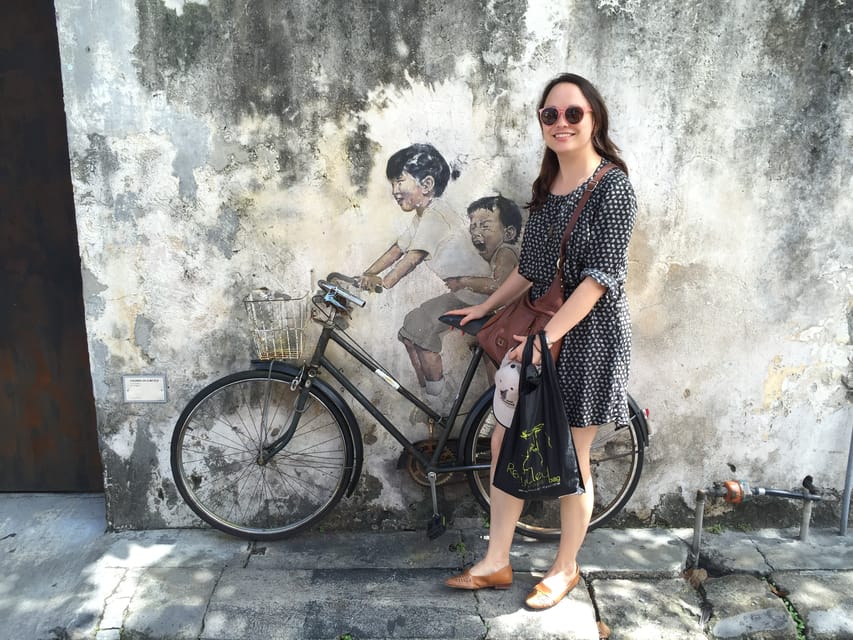
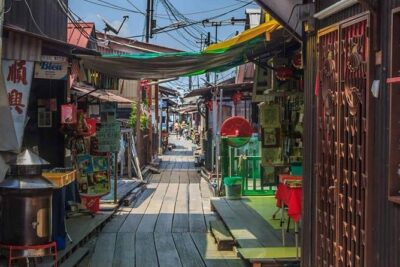
Between food stops, you walk through Georgetown’s Heritage Zone. The city itself becomes part of the tour, with Ernest Zacharevic’s street art murals and iron-rod sculptures by local artists appearing along the route.
The art gives you visual landmarks between tastings, but the guide’s local context is what makes the walk more than a food crawl. You will see how food businesses sit within an older urban setting, with temples, mosques, churches, and family shops close together.
The route also passes the oldest fire station in town. It is a small detail, but these details help you read Georgetown as a living city rather than a backdrop for photographs.
Bring an umbrella. Penang’s heat and rain can make a three-and-a-half-hour walk feel longer, and the tour does not take place inside one air-conditioned venue. Wear breathable clothing and supportive shoes. Large bags and luggage are not allowed, so leave your suitcase at your accommodation.
More Penang heritage trips from George Town Malaysia
- George Town, Penang: Malay Countryside Cycling
★ 4.7 · 287 reviews - Penang: Kek Lok Si Temple and Penang Hill Guided Tour
★ 4.9 · 199 reviews - Penang: Penang Island Full-Day Private Tour
★ 4.6 · 134 reviews - Penang: The Habitat Penang Hill Entry Ticket
★ 4.5 · 111 reviews
Asam laksa and Penang’s distinct flavor profile
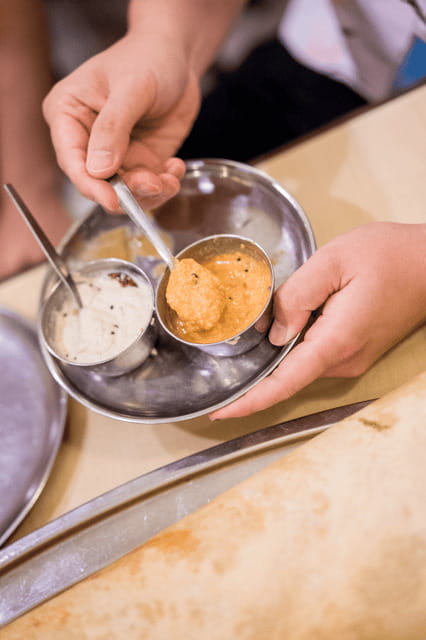
Asam laksa is one of the major savory stops. Penang’s version balances sweet, sour, and savory flavors, and it differs from the version associated with Kuala Lumpur.
The sour element gives the dish its lift, while the broth and accompaniments bring depth. You should expect a dish with a clear personality rather than a mild noodle soup. If you like bright, assertive flavors, this may be one of the tour’s strongest tastings.
The guide’s comparison with Kuala Lumpur is useful because it shows how Malaysian dishes change from place to place. A dish name alone does not guarantee the same recipe, texture, or balance. Penang’s food identity is partly about these local variations.
Asam laksa can also be a challenging stop for cautious eaters. The flavor profile is not bland, and the tour is built around local versions rather than toned-down food for visitors. If you have strong dislikes or allergies, tell the guide before the walk. The provided details do not specify allergy accommodations, so you should confirm those in advance.
Meeting Nyonya food at Moh Teng Pheow
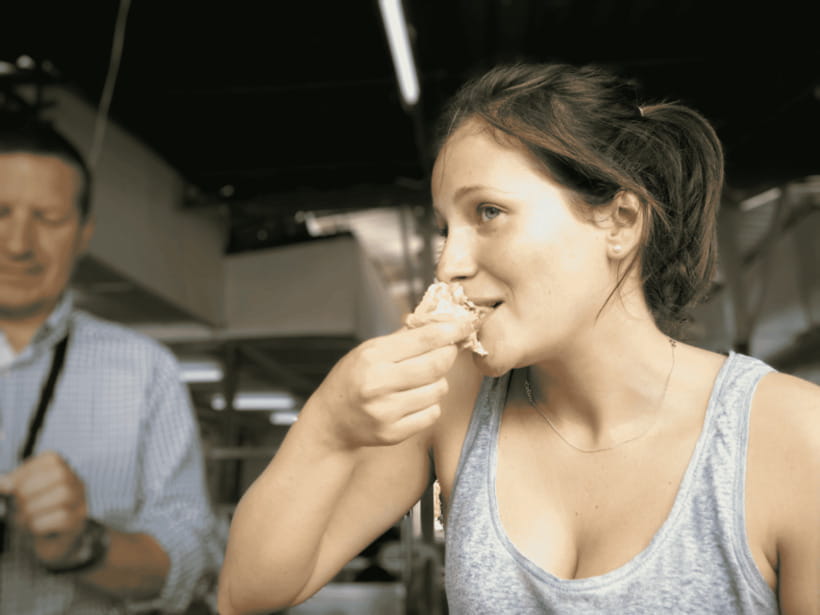
Moh Teng Pheow Nyonya Koay brings Peranakan food into focus. The cafe is Michelin-listed, but the more important reason to stop is the range of Nyonya kuey on offer.
Kuey can include cakes, dumplings, puddings, and pastries. These foods show how Baba and Nyonya communities developed from Chinese and Malay cultural fusion. You are not just tasting sweets. You are learning how recipes, customs, and family identity can meet in one kitchen.
The cafe’s recipes are described as unchanged since 1933. That gives the stop a clear sense of continuity, while the guide explains the people and customs behind the food. Ask questions here. This is the point where terms such as Baba, Nyonya, and kuey can become more than labels on a menu.
The range may be unfamiliar, and some textures can be soft, sticky, or dense. That is part of the lesson, but it may not suit someone who wants only crisp snacks or familiar desserts. The guide can help you understand what you are tasting and how the items fit into Nyonya cooking.
Harmony Street and the city behind the food
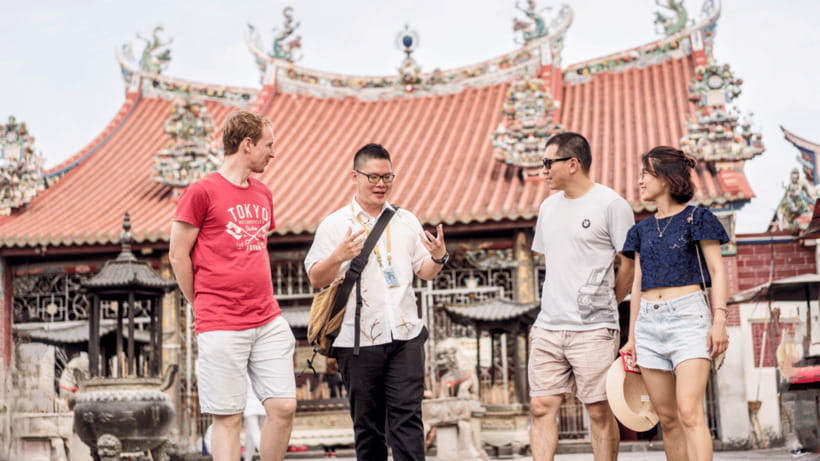
The walk passes temples, mosques, and churches along Harmony Street. This is one of the clearest places to connect Penang’s food culture with its social history.
The point is not that every community cooks the same food. It is that trade and daily contact allowed Malay, Chinese, and Indian influences to shape the city side by side. The food stops make more sense when you see the religious and civic buildings that formed the same urban setting.
I like this part because it keeps the tour from becoming a string of disconnected snacks. A food walk should tell you why the food exists in that place. Harmony Street gives the guide a natural moment to explain coexistence, community, and the shared city around you.
Still, you should expect the walking sections to be educational rather than a formal architecture tour. The guide will point out temples, mosques, churches, murals, sculptures, and the fire station, but the main focus remains food and culture.
Why the small group affects the experience
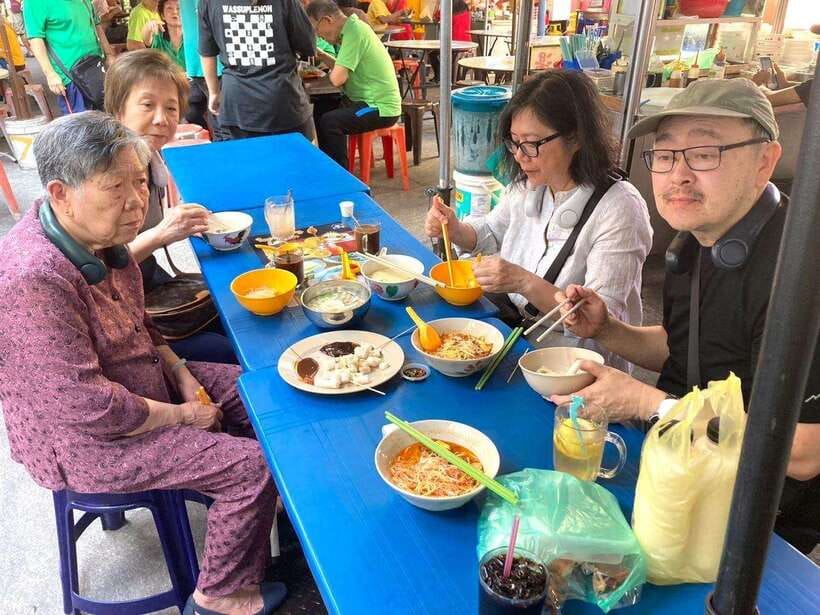
The group limit is nine people. That is small enough for a guide to keep track of everyone at crossings and food stalls, and it should make explanations easier to hear.
The guide can also gauge your appetite. This matters on a food walk because too much food can turn an enjoyable morning into a test of endurance. Smaller portions and shared tastings let you sample more kinds of food without wasting as much.
The tour includes a licensed English-speaking local guide, food and drinks at selected family-run stalls, and the cultural explanation tied to each stop. The guides are officially licensed to share Malaysia’s story, not only to point out dishes.
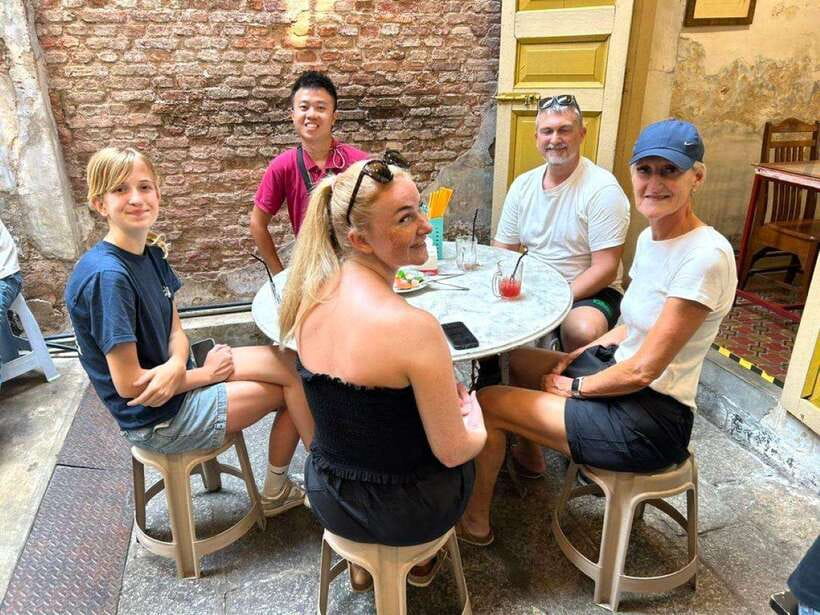
There is no named guide assigned in the available details, so do not book expecting a particular individual. The guide wears either a white Simply Enak polo shirt or a white batik shirt. Arrive 15 minutes early and look for that clothing at the meeting point.
Is $75 a fair price for three and a half hours?
At $75 per person, this is not the cheapest way to grab street food in Penang. You could eat many individual dishes for less if you chose stalls yourself.
The value comes from the structure. The price covers a licensed guide, selected food and drinks, access to family-run stops, a popiah-making demonstration, market orientation, and the cultural background that ties the dishes together. You are paying for a guided introduction, not simply for calories.
The small group also matters. A large food tour can become a queue with a lecture attached. A maximum of nine people gives the guide more room to answer questions and adjust portions. For a first visit to Georgetown, that can make the price reasonable.
I would be less enthusiastic about the value if you already know Penang well, speak with local vendors comfortably, and prefer to choose every dish yourself. In that case, the fixed route and included tastings may feel restrictive. If you want context and a strong first look at Penang food, the price is easier to justify.
Who should book this Penang food walk?
I would recommend it to first-time visitors who want to understand how Penang’s food developed, not just photograph a bowl of noodles. It is also a good fit for curious eaters who enjoy unusual textures, sharp sour flavors, durian, and sweets.
The tour suits you if you value small family businesses and demonstrations of old techniques. The 50-year popiah tradition and the Nyonya recipes dating to 1933 give the walk more substance than a standard snack route.
It is less suitable if you have limited mobility, dislike walking in heat or rain, or need a completely predictable menu. The activity is marked wheelchair accessible but also not suitable for people with mobility impairments. That conflict should be clarified directly before booking.
You should also avoid bringing luggage or a large bag. Wear comfortable shoes, bring water and an umbrella, and choose breathable clothes. The tour is conducted in English, so you need enough English to follow the guide’s food and cultural explanations.
Should you book it?
Book this tour if you want a compact introduction to Georgetown through food, family businesses, and local history. The strongest parts are the small group, the handmade popiah demonstration, the Nyonya stop at Moh Teng Pheow, and the chance to taste foods such as nutmeg pickle, durian dodol, and Ngor Ka Sai.
Skip it if you want a cheap, self-directed meal crawl or if a long walk is difficult for you. At $75, the tour earns its price through access, explanation, and careful pacing rather than the amount of food alone.
For most first-time visitors with three and a half hours to spare, it is a thoughtful way to get your bearings in Penang’s food culture. Free cancellation up to 24 hours before the start and reserve-now-pay-later booking also make it easier to fit into a changing itinerary.
FAQ
How long does the Penang street food walking tour last?
The tour lasts 210 minutes, or three and a half hours.
Where does the tour start?
The tour starts at Chowrasta Market, the oldest market in Penang, with roots dating to the 1890s.
What food and drinks are included?
Included tastings and drinks feature local coffee with Milo called Ngor Ka Sai, nutmeg pickles, durian dodol, Penang asam laksa, and Nyonya kuey. Food and drinks are served at selected family-run stalls and venues.
Is the tour conducted in English?
Yes. The tour has a live English-speaking guide.
How many people are in the group?
The tour is limited to nine participants.
What should I bring?
Bring comfortable shoes, an umbrella, water, and breathable clothing. Luggage and large bags are not allowed.
Can I cancel the booking?
You can cancel up to 24 hours in advance for a full refund. You can also reserve your place and pay later, subject to availability.
Walking George Town Malaysia
- Kuala Lumpur Local Street Food Private Walking Tour by Night
★ 4.5 · 224 reviews - Melaka UNESCO City Guided Walking Tour – Tip Based
★ 5.0 · 35 reviews - Kuala Lumpur: Nightlife Walking Tour with Local Guide
★ 5.0 · 33 reviews - Half Day Cultural And Heritage Walking Tour in Kuala Lumpur
★ 5.0 · 28 reviews
Eating well in George Town Malaysia
- George Town: Authentic Food Tour with 12+ Tastings
★ 4.7 · 7 reviews - George Town: Heritage Walking Tour with Street Food Tasting
★ 4.7 · 6 reviews - Sambal Streets Kuala Lumpur Food Tour with 15+ Tastings
★ 5.0 · 2,438 reviews - Kuala Lumpur: Sambal Street Food Tour with 15+ Tastings
★ 4.9 · 1,657 reviews
Just added around George Town Malaysia
- Penang: Wonderfood Museum Entry Ticket★ 4.8 · 7 reviews
- Penang: Trishaw Ride and Hawker Center Food Tour★ 4.3 · 20 reviews
- Penang: Private Customized Flexible Tour with Tourist Guide★ 5.0 · 19 reviews
- Penang Local Food Hunting★ 5.0 · 10 reviews
- Penang: Private Highlights Tour with Temples, Hill & Gardens★ 5.0 · 5 reviews
- Penang: ATV Ride in Balik Pulau with Snacks and Transfers★ 4.6 · 13 reviews
- George Town: Heritage Walking Tour with Street Food Tasting★ 4.7 · 6 reviews
- George Town: Authentic Food Tour with 12+ Tastings★ 4.7 · 7 reviews
Kuala Lumpur Walking Tours, compared.
Kuala Lumpur Local Street Food Private Walking Tour by Night
Read our review →
Melaka UNESCO City Guided Walking Tour – Tip Based
Read our review →
Half Day Cultural And Heritage Walking Tour in Kuala Lumpur
Read our review →
Private George Town UNESCO Heritage Walking Tour
Read our review →
Browse the lists this tour appears in