
Reviewed · KUALA LUMPUR WALKING TOURS
Half Day Cultural And Heritage Walking Tour in Kuala Lumpur
Kuala Lumpur’s story is easiest to understand on foot, where a mosque, colonial square, Chinese temple, market, and Hindu temple sit within one compact cultural route. I like the way this walk connects the city’s Malay, Chinese, and Indian traditions instead of treating them as separate sightseeing stops. I also like the chance to see where locals shop and eat, not just the city’s polished modern side.
The main trade-off is simple: four hours on city streets can feel warm and tiring, and this is a walking tour rather than a food tour or museum visit. You will need to pay for lunch yourself, and there is no hotel pickup or drop-off.
Key points to know before you book
- Three cultures in one route: Visit a mosque, a Taoist Chinese temple, Chinatown, Central Market, and a Hindu temple.
- Strong guide element: Licensed guides such as Yen and Ben Chua provide the historical and religious context that makes the stops meaningful.
- Small group size: The tour is limited to a maximum of 15 people, a useful size for questions and street-side explanations.
- Four hours on foot: The pace includes several 30-minute stops, with shorter photography breaks at the River of Life and Kwai Chai Hong.
- Good value for a central KL introduction: At $39.03 per person, you pay mainly for guiding and structure, since admission to the listed stops is free.
- Convenient city-center start: Meet at Masjid Jamek and return to the same meeting point, with public transport nearby.
Why this walk gives you a useful first look at Kuala Lumpur
Kuala Lumpur can seem like several cities layered together. Glass towers and shopping malls share space with old religious buildings, colonial-era offices, street markets, and neighborhood food stalls. This tour gives you a way to connect those pieces without spending the day arranging separate visits.
The route focuses on central Kuala Lumpur and explains how different communities shaped the city. You are not simply checking off buildings. At the mosque, you get an introduction to Muslim worship. At the Chinese temple, you see traditional Taoist practice. In Chinatown and Central Market, you get a look at trade, crafts, food, and everyday shopping. The Indian temple adds another important part of the city’s religious life.
I find that the licensed guide matters here. Without commentary, some of the buildings can blur together, especially if you are unfamiliar with Malaysian customs or religious symbols. Guides Yen and Ben Chua have been specifically praised for clear explanations, strong local pride, and careful attention to the group. Ben, in particular, is known for linking the historic side of Kuala Lumpur with the city you see today.
The group is capped at 15 people. That is not a private tour, but it is small enough to hear the guide and ask questions without feeling lost in a crowd.
More Walking Tours in Kuala Lumpur
- Kuala Lumpur Local Street Food Private Walking Tour by Night
★ 4.5 · 224 reviews - Kuala Lumpur: Nightlife Walking Tour with Local Guide
★ 5.0 · 33 reviews - Kuala Lumpur InfoFun Walking Tour Experience
★ 5.0 · 24 reviews
Starting at Sultan Abdul Samad Jamek Mosque
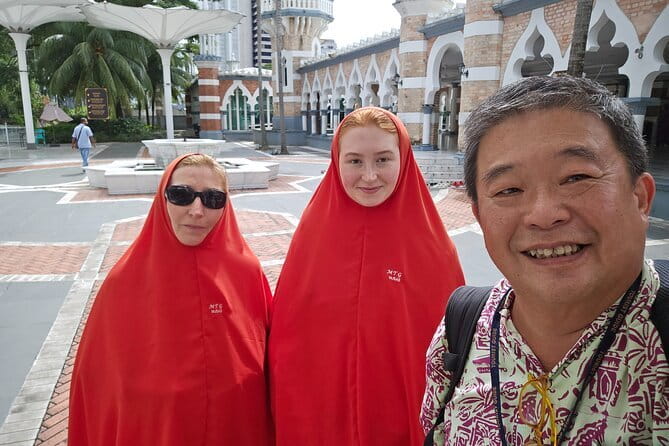
The walk begins at Masjid Jamek, also called Sultan Abdul Samad Jamek Mosque. The name Jamek refers to a congregation of people gathering for worship, which gives you an immediate clue to the building’s role in the city.
This is one of Kuala Lumpur’s oldest mosques, designed by A. B. Hubback. You have about 30 minutes here, enough for an introduction to the architecture, the mosque’s name, and its place in Kuala Lumpur’s story. The guide’s explanation is especially useful if you want to understand how Islam fits into Malaysia’s cultural and national identity rather than viewing the mosque only as a photo stop.
You should treat this as a place of worship. Dress and behavior need to be respectful, and access may depend on current conditions at the mosque. The supplied tour details do not specify a dress code or visiting restrictions, so ask the guide for current instructions at the start.
Reading Kuala Lumpur at Dataran Merdeka
From the mosque, the tour continues to Dataran Merdeka, or Independence Square. Allow about 30 minutes for this broad historic area, which includes the Sultan Abdul Samad Building, the Textile Museum, and the tall Malaysian flagpole.
This is one of the best parts of the tour for understanding Kuala Lumpur’s public history. The square brings together colonial architecture, national symbols, and important civic space. The Sultan Abdul Samad Building gives the area its grand visual focus, while the flagpole points to Malaysia’s modern national identity.
I especially like this stop for visitors who want more than religious sites. The architecture helps explain the city’s colonial period, while the square shows how national memory is presented today. A guide can also help you read the details instead of simply taking a picture and moving on.
The tour allows 30 minutes, so expect an overview rather than a full architectural study. If you want to explore the Textile Museum in detail, you may need to return on your own.
Finding the source of the city’s name at the River of Life
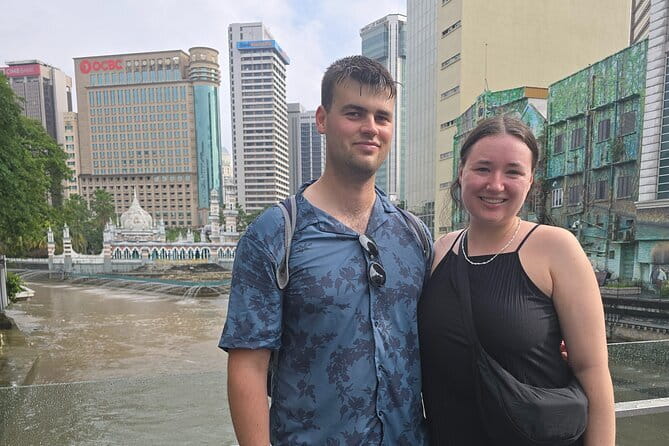
The River of Life is a short 15-minute stop, mainly intended for views and photographs. This is where you can see the meeting point connected to the name Kuala Lumpur, commonly understood as a reference to a muddy confluence.
The stop adds useful geography to the tour. You have just seen civic buildings and religious sites, but here the city’s name is tied to its physical setting. The short visit also gives your feet a break from the longer 30-minute stops.
Keep your expectations measured. Fifteen minutes is enough for an explanation and photographs, not a long riverside walk. The value is in the connection between the river, the city’s name, and Kuala Lumpur’s early development.
More guided walks around Kuala Lumpur
- Melaka UNESCO City Guided Walking Tour – Tip Based
★ 5.0 · 35 reviews - Penang: Georgetown Foodie Walking Tour with a Cocktail
★ 4.9 · 11 reviews
Shopping for Malaysian crafts at Pasar Seni
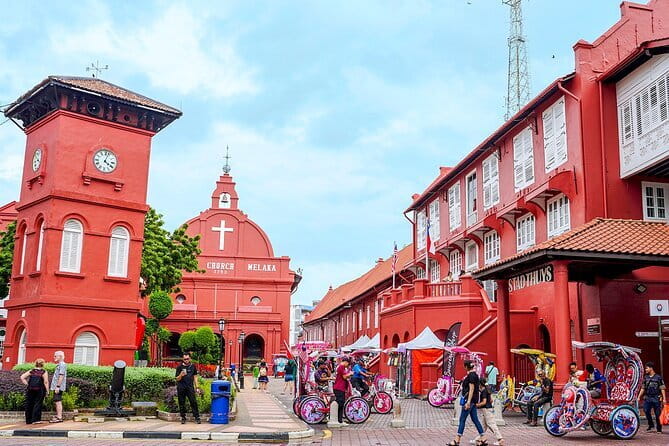
Pasar Seni, better known as Central Market, was once a wet market. Today it is a center for Malaysian culture, art, and crafts, with possible purchases including batik, songket, and Labu Sayong pottery.
You have around 30 minutes here. That is enough to browse, see the range of local goods, and get a sense of how Malaysian craft traditions are presented to shoppers. If you want to buy souvenirs, this is one of the most practical stops on the route.
Batik and songket are especially useful things to look for if you want a purchase tied to Malaysian textile traditions. Labu Sayong offers a different look at local craft through pottery. The tour does not include shopping costs, so bring your own spending budget if you hope to buy something.
Central Market can also feel more commercial than the religious and historic stops. I see that as both a benefit and a limitation. It is convenient for souvenirs, but you should not expect an untouched local market. The guide’s role is to help you understand the cultural value behind the crafts rather than leaving you to browse without context.
Entering Sin Sze Si Ya Temple
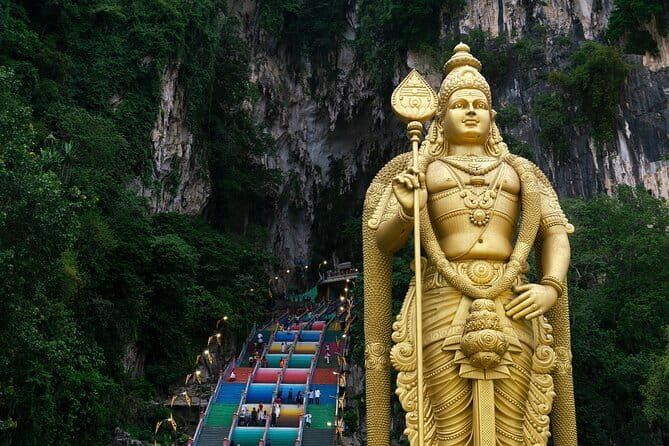
Sin Sze Si Ya Temple is described as the oldest Chinese temple in Kuala Lumpur. It was built by Yap Ah Loy, who is identified with the founding of the city.
The 30-minute visit introduces you to traditional Chinese Taoist beliefs and practices that remain part of Kuala Lumpur’s cultural life. This is an important change of mood from the mosque and the colonial square. You will see how different religious traditions occupy the same central city and how Chinese communities helped shape Kuala Lumpur.
The temple is not just an old building to photograph. Its importance comes from the combination of religious practice and city history. With a guide such as Ben, you can ask about what you are seeing and how the temple relates to Chinese settlement in Kuala Lumpur.
As with the mosque and Hindu temple, show care inside a working place of worship. The experience is strongest when you observe quietly and let the guide explain the customs.
Exploring Petaling Street in Chinatown
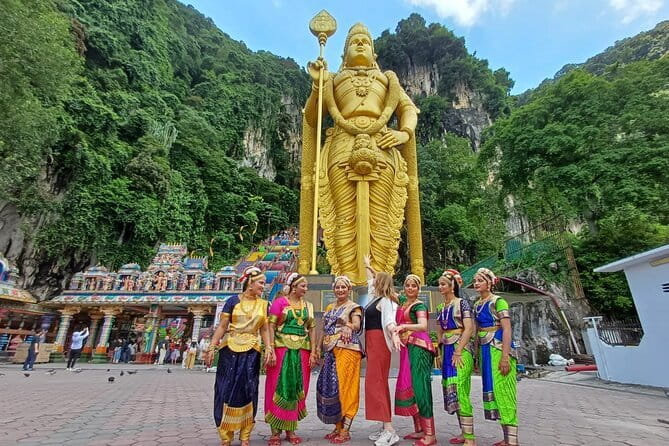
Chinatown, known locally as Petaling Street, receives about 30 minutes. This is the most commercial and food-focused part of the route, with textiles, electronic goods, and Chinese food.
I would pay close attention here if you want a sense of how Kuala Lumpur’s Chinese community is represented in daily trade and eating habits. The stop is not only about souvenirs. It helps connect the temple visit with a living neighborhood where commerce and food remain central.
The route description points to traditional Chinese food, but lunch is not included. That is worth noting because you may be hungry by this stage of a four-hour walk. You can look for food here, but the tour price does not cover it, and the schedule may not allow a long sit-down meal. If food is your main reason for visiting Chinatown, you may want to return later with more time.
Petaling Street is also where the tour may feel busiest and least reflective. That contrast is useful. Kuala Lumpur’s heritage is not confined to monuments. It also appears in shops, street trade, and what people eat.
Photographing old stories at Kwai Chai Hong
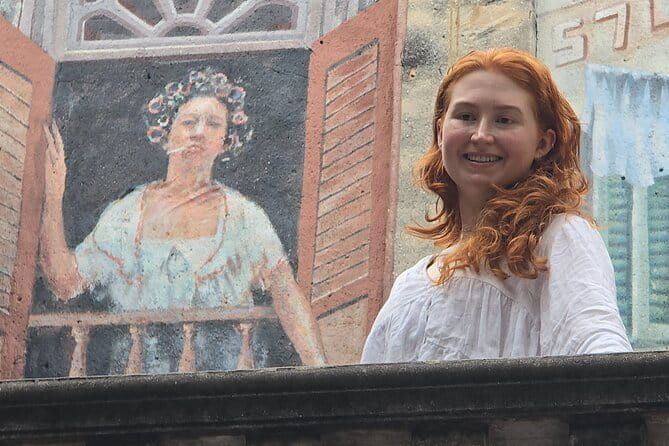
Kwai Chai Hong, translated in the tour details as Little Demon Street, is a short 15-minute stop and a favorite for photographs. Its wall murals show scenes connected with traditional Chinese life in Kuala Lumpur.
The murals give you a quick visual way to think about the past. After visiting a temple and walking through Chinatown, you can use the artwork to link religious tradition, neighborhood life, and memory. It is a compact stop, so expect photographs and a short explanation rather than a long art visit.
This is a good place to have your camera ready. The tour identifies it as a strong photography location, but the appeal is not only visual. The murals help make the older Chinese quarter easier to imagine.
Seeing Sri Maha Mariamman Temple
The final major stop is Sri Maha Mariamman Temple, with about 30 minutes for a visit. It is described as one of Kuala Lumpur’s most popular temples and is both a place of worship and an eye-catching cultural site.
This gives the route a clear three-part religious structure: Muslim, Chinese Taoist, and Hindu traditions. That range is one of the strongest reasons to choose this tour. You are not being asked to compare religions in a simplistic way. Instead, you are shown several forms of worship that help explain Malaysia’s mixed cultural identity.
The temple can be especially striking for visitors who have already seen the mosque and Chinese temple. Each place has its own visual language and practices, and a good guide can explain the differences with respect. The stop also brings you back to the Indian side of Kuala Lumpur’s story, which is easy to miss if you focus only on colonial buildings or Chinatown.
Remember that this is an active religious site. Listen to the guide’s instructions, keep your behavior respectful, and ask before taking photographs if you are unsure.
What $39.03 gets you
The cost is $39.03 per person. All listed stops have free admission, so the price is mainly for the licensed guide, planning, and the convenience of a connected four-hour route.
That makes the value depend on how much context you want. If you are comfortable researching Kuala Lumpur’s religious sites, colonial architecture, and markets yourself, you could visit much of the route independently for less. You would also need to plan the order, navigate between stops, and find explanations for what you are seeing.
If you want a clear introduction on your first day or two in the city, the price is easier to justify. You get a structured route, a guide who can answer questions, and a small group rather than a large coach. The tour also takes you to places where local shopping and food are part of the picture, not just major photo points.
Lunch, personal purchases, and hotel transport cost extra. The tour starts and ends at Masjid Jamek, so you need to make your own way there. Public transportation is nearby, which keeps the meeting point practical for many visitors.
Timing, comfort, and who should book
Plan for roughly four hours of walking, with several 30-minute visits and two shorter stops. The route is likely to feel active rather than rushed, but Kuala Lumpur’s weather can make any outdoor walk demanding. Wear comfortable shoes, carry water, and allow room in your schedule for heat or pauses.
The tour requires good weather. If poor weather causes cancellation, you are offered another date or a full refund. You can also cancel for a full refund if you do so at least 24 hours before the start time. Changes or cancellations made within 24 hours are not accepted for a refund.
Most people can participate, and service animals are allowed. The tour uses a mobile ticket, which is convenient if you keep your booking on your phone.
I would recommend this walk to first-time visitors, curious walkers, and anyone who wants a practical introduction to Malaysia’s main cultural communities. It is also a good choice if you enjoy architecture but want more than colonial buildings. The guide names worth requesting, if available, are Yen and Ben Chua, both associated with clear explanations and a personable style.
I would be more cautious if you dislike walking in warm weather, need hotel pickup, or want a slow food-focused tour. You may also prefer an independent visit if you want to spend a long time shopping at Central Market or eating in Chinatown.
Should you book this Kuala Lumpur heritage walk?
Book it if you want four hours of clear cultural orientation, with major religious sites, historic buildings, markets, and photo stops tied into one route. The guide is the main reason to choose it. Yen and Ben Chua bring the explanation that turns a sequence of buildings into a readable story about Kuala Lumpur.
Skip it if your priority is the Petronas Towers, a long restaurant meal, or private transportation. For $39.03, this is not a bargain sightseeing shuttle. It is a guided walking introduction to the city’s Malay, Chinese, and Indian roots, and it offers good value when you want history and daily life explained as you go.
FAQ
How long does the cultural walking tour last?
The tour lasts approximately four hours.
Where does the tour start?
It starts at Masjid Jamek in Kuala Lumpur City Centre, at 50050 Kuala Lumpur, Malaysia.
Where does the tour end?
The activity ends back at the meeting point.
What places are visited?
The route includes Sultan Abdul Samad Jamek Mosque, Dataran Merdeka, the River of Life, Pasar Seni or Central Market, Sin Sze Si Ya Temple, Chinatown, Kwai Chai Hong, and Sri Maha Mariamman Temple.
Is lunch included?
No. Lunch is not included in the tour price.
Is hotel pickup and drop-off provided?
No. Pickup and drop-off are not included. Public transportation is available near the meeting point.
How many people can join the tour?
The tour has a maximum group size of 15 people.
Just added around Kuala Lumpur
- Hidden Kuala Lumpur: 4-Hour Bike Tour★ 4.7 · 26 reviews
- Genting Highlands Private Day Trip with Batu Caves★ 4.8 · 7 reviews
- Genting Highland: Private Day Trip from Kuala Lumpur★ 4.3 · 29 reviews
- From Kuala Lumpur: Kuala Gandah & Batu Caves Day Trip★ 4.4 · 8 reviews
- From Kuala Lumpur: Port Dickson Tour with Dragon Cruise★ 3.4 · 5 reviews
- From Kuala Lumpur: Kampar River White Water Rafting★ 4.3 · 13 reviews
- Kuala Lumpur: Kuala Selangor Firefly Tour and Dinner★ 4.7 · 11 reviews
- Private Kuala Lumpur and Putrajaya Highlights in One Day★ 5.0 · 7 reviews
Kuala Lumpur Walking Tours, compared.
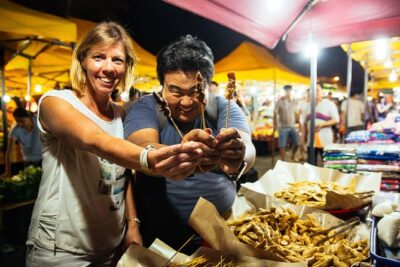
Kuala Lumpur Local Street Food Private Walking Tour by Night
Read our review →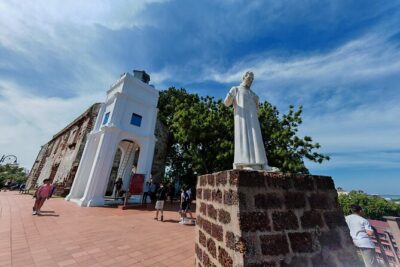
Melaka UNESCO City Guided Walking Tour – Tip Based
Read our review →
Browse the lists this tour appears in