
Reviewed · KUALA LUMPUR TOURS
Malaysian Batik Experience-Handkerchief
The most memorable part of this Kuala Lumpur activity is using a traditional canting tool to draw hot wax onto fabric. You sketch first, then paint between the wax lines, creating a personal piece of Malaysian batik rather than buying another ready-made souvenir.
I like the patient, hands-on teaching and the freedom to use a template or make your own pattern. I also like the practical setup: materials, bottled water, snacks, and drying are included, and the private format means your group can work at its own pace.
The main thing to plan around is the finishing time. You can take a dried piece home after the session, but a finished, washable handkerchief may require four hours or an overnight return visit. That matters if you leave Kuala Lumpur soon after.
Key Points Before You Book
- Use a canting tool: Apply hot wax by hand using a traditional method that has been used for more than 100 years.
- No art background needed: Staff demonstrate each stage and help you from sketching through painting.
- Pick a template or draw freely: Traditional designs and many colors make the activity manageable for beginners.
- Plan for the finishing stage: A picture-style piece may be ready quickly, while a washable handkerchief needs extra time.
- Good for families and mixed abilities: The process is calm, creative, and suitable for primary school age and up.
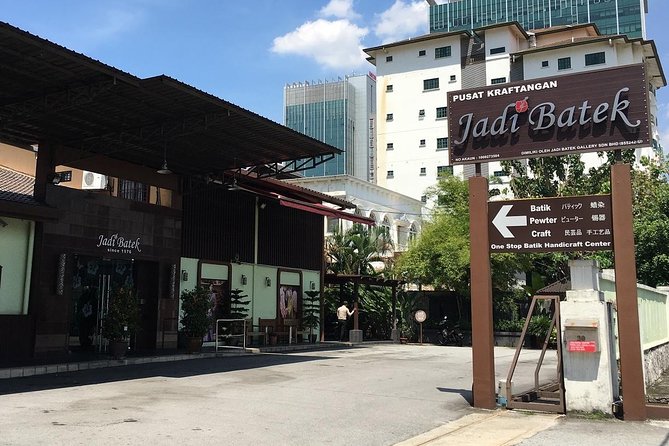
- Central meeting point: The workshop takes place at Jadi Batek Gallery on Jalan Inai in the Imbi area of Kuala Lumpur.
Making Batik in Central Kuala Lumpur
This is a compact cultural activity with a clear reward: you go home with something you made yourself. At $17 per person, the price covers the workshop, tools, fabric materials, bottled water, snacks, and GST. You are paying for instruction and a usable souvenir, not only for a demonstration.
The session takes place at Jadi Batek Gallery, 30 Jalan Inai, Imbi, 55100 Kuala Lumpur. The gallery is near public transportation, but transport to and from the venue is not included. You meet there and finish back at the same point.
The setting gives you more than a table and some paint. You may also see batik being drawn by hand in the larger gallery space, which helps you compare your careful first attempt with work made by experienced artists. That contrast is useful. Batik looks simple from a distance, but the wax lines and brush control take patience.
The activity lasts about two hours. It is a private experience for your own group, so you are not placed into a large shared class. That makes it easier to ask for help, take your time with a design, or let children work at a comfortable pace.
A few more trips around Kuala Lumpur worth a look
- Kuala Lumpur: Batu Caves Half-Day Tour with Pick-Up Option
★ 4.5 · 4,288 reviews - Private Half-Day Batu Caves and Cutural Tour in Kuala Lumpur
★ 5.0 · 3,107 reviews - Sambal Streets Kuala Lumpur Food Tour with 15+ Tastings
★ 5.0 · 2,438 reviews
First Stop: Jadi Batek Gallery
Your visit begins with an introduction to batik and its traditional process. The staff explain the stages before you start, so you know why the wax matters and how the dye will behave on the fabric.
This opening is brief but useful. You are not simply handed a brush and told to copy a picture. You first get a basic sense of how batik is made, then put that information to work.
The gallery also functions as a batik shop, with batik clothing and gifts available. That can be handy if someone in your group wants to buy a finished item instead of making one. It also gives you a chance to see the difference between a professionally produced batik garment and your own small artwork.
The venue is air-conditioned and spacious, a real advantage during a hot Kuala Lumpur afternoon. The activity requires concentration, so a cool room makes the two hours more comfortable.
Choosing a Pattern You Can Actually Finish
After the introduction, you sketch your design. You can draw freely, but you do not have to invent a pattern from scratch. Templates are available, with many designs and colors to choose from.
For most people, selecting a template is the smart choice. It lets you spend your time learning the wax and paint rather than worrying about whether your drawing will work on fabric. You still make the important decisions: color, paint coverage, and the way you handle the lines.
If you have children in the group, templates also provide a useful starting point. The activity has been described as suitable for primary school age and older, but young participants will still need help with the hot wax and careful tool handling.
Do not rush the sketch. Wax will follow the lines you create, and the final painted effect depends on how clearly the design is laid out. A simple pattern with clean shapes may produce a better result than an ambitious drawing packed with tiny details.
The Canting Tool and the Hot Wax Stage
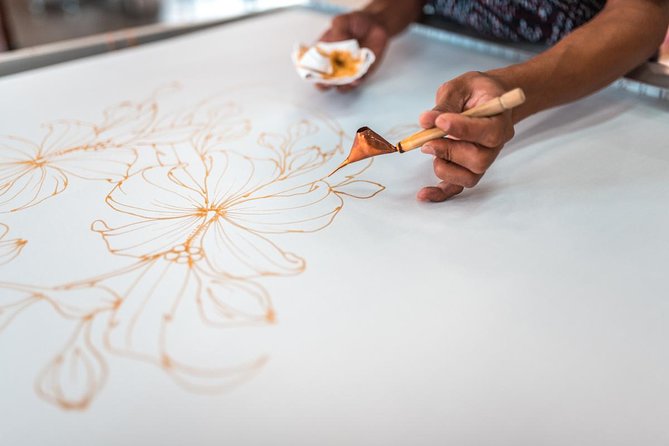
Once the sketch is ready, you use a canting, a traditional tool for applying hot wax to fabric. The wax creates barriers between areas of dye. When you paint, those lines help keep the colors from running into one another.
This is the most distinctive part of the workshop. You are learning a technique associated with Malaysian textile art, not simply decorating cloth with ordinary fabric paint.
The tool requires a steady hand. Wax is hot, and the lines need to be controlled. Staff demonstrate the method and guide you as needed, so beginners are not left to guess. Still, expect a learning curve. The process is slower and more exact than it first appears.
That is part of the appeal. You will probably notice small irregularities in your lines, but those marks show that the piece was made by you. The class is not about producing factory-perfect fabric. It is about understanding the method well enough to create something personal.
Keep your pace steady. If you move too quickly, your wax line may become uneven. If you are working with a child, it is sensible for an adult or staff member to take the lead with the hottest parts of this stage.
Same base, a different sort of day:
- Historical Malacca Guided Day Tour (Shared Tour)
★ 5.0 · 2,172 reviews - Kuala Lumpur: Sambal Street Food Tour with 15+ Tastings
★ 4.9 · 1,657 reviews - From Kuala Lumpur: Batu Caves Cultural Temple Tour
★ 4.7 · 1,453 reviews - Genting Highland & Batu Cave Guided Day Tour (SIC/Shared Tour)
★ 5.0 · 1,289 reviews
Painting With Ready-Made and Custom Colors
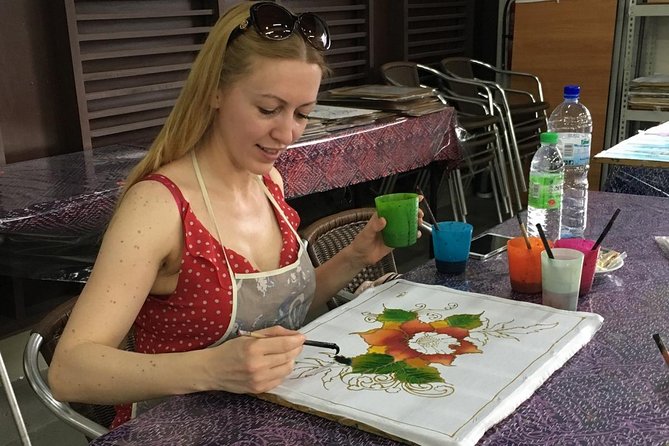
After the wax comes the most relaxed stage: painting the fabric. You can choose from the dyes in the workshop and mix custom colors if you want something different.
The color choices let you make the design your own, even when you use a template. A traditional outline can look completely different depending on whether you use soft tones, strong contrasts, or several mixed shades.
The staff provide individual instructions and help when needed. You can ask about how much dye to apply or how to work around the wax lines. The process is accessible, but it is not entirely automatic. You need to watch the amount of paint and take care around the edges.
This is where the activity becomes especially peaceful. The sketching and waxing require focus, while painting gives you room to experiment. One group was allowed to continue for an extra hour because they were enjoying the process, but you should not assume that extra time is guaranteed. The booked activity is approximately two hours.
Snacks and bottled water are included, which is a small but useful touch. You do not need to bring specialist equipment or buy supplies at the venue.
What You Take Home and When You Get It
At the end of the drawing and painting stages, staff dry the fabric. If you are happy with a dried art piece, you may be able to take it home after the session.
The timing changes if you want a finished handkerchief that can be washed. In that case, the fabric needs further preparation, including removing the wax. The stated guidance is to wait four hours or return the next day for collection.
This is the most important practical detail. If you have a late flight, a tight sightseeing schedule, or only one night in Kuala Lumpur, ask about the finish you can collect before you begin. Some people choose to take the work with the wax still in place because they are leaving the following day.
If you can return, the extra wait is worthwhile. A completed and washable handkerchief is more useful than a decorative piece with wax still on it. Staff may also mount the finished work in a cardstock frame, which makes it easier to carry home as a small art piece.
You can pay RM10 to have the edge sewn. Courier delivery is also available for an extra charge, with the fee depending on the destination. These services are optional, so they are not part of the $17 base price.
Is the $17 Price Good Value?
I consider $17 a fair price for this experience. The fee includes the instruction, fabric, tools, dyes, GST, water, and snacks. You also receive a take-home piece, which gives the activity more value than a short demonstration with nothing physical to show for it.
The private format improves the value for families or couples. You are not sharing the session with an unknown crowd, and staff can give your group direct support. That said, the workshop is still a beginner activity. If you already make batik or want advanced textile training, the short format may feel limited.
The gallery setting adds another benefit. You can see finished batik products and watch hand-drawn work, then decide if you want to buy additional clothing or gifts. Shopping is not required, but it is part of the venue.
The only likely added costs are transport, edge sewing, and courier delivery. Since transport is excluded, check your route to Jalan Inai before booking. The location is near public transportation, which keeps the visit fairly simple to reach.
Who Will Enjoy This Workshop Most?
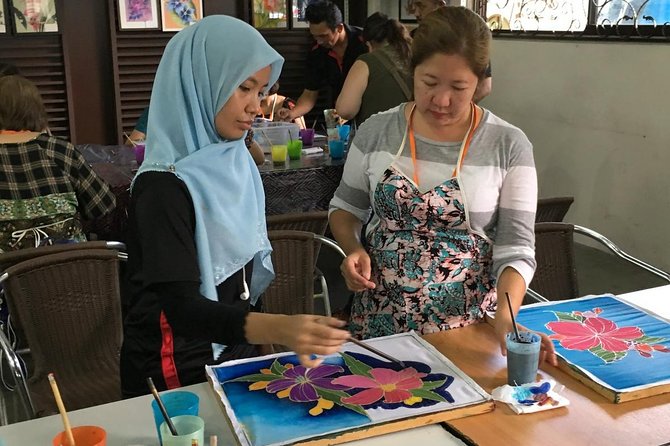
I would choose this for families, couples, solo visitors who like making things, and anyone looking for a quieter break from Kuala Lumpur sightseeing. It works well on a hot day because the activity takes place indoors in a cool gallery.
It also suits people who want a souvenir with a personal story. A shop-bought scarf may be more polished, but your handkerchief or fabric artwork records the time you spent learning a Malaysian craft.
The class can be a good fit for someone who prefers hands-on activities to museums. It is also gentle enough for people who enjoy a calm, focused task. One participant described the process as especially relaxing and suitable for an autistic person. That does not guarantee the same experience for everyone, but the clear instructions, predictable stages, and supportive assistance may appeal to people who prefer structured creative work.
You should think twice if you dislike careful, repetitive tasks or have no time to return for collection. You can still take a dried piece with you, but it may not be ready for washing or final presentation.
Practical Details for a Smoother Visit
Book at least 24 hours ahead if you want the option of a full refund. Cancellations made at least 24 hours before the local start time receive a full refund. Changes or cancellations inside that window are not accepted for a refund.
Confirmation is provided when you book. Most people can participate, and the activity is private for your group. No special artistic experience is required.
Wear something you can work comfortably in, though no special clothing requirement is provided. Pay attention during the hot wax demonstration, and take care when choosing a design if your time in Kuala Lumpur is short.
The easiest plan is to schedule the workshop when you can return later that day or the next morning. If that is impossible, tell the staff at the start that you need a same-day piece and ask exactly what finish will be ready.
Should You Book the Malaysian Batik Experience?
Book it if you want a short, affordable cultural activity where you learn by doing. The strongest parts are the traditional canting technique, friendly step-by-step help, wide choice of templates and colors, and the chance to take home something you created.
I would not book it as a full batik course or an advanced art lesson. It is an introduction, built to be approachable in about two hours. The extra finishing time also requires planning.
For most visitors, the $17 cost is sensible, especially if you value an activity more than another purchased souvenir. Choose a design you can complete, leave room in your schedule for drying, and you should come away with both a better understanding of batik and a personal reminder of Kuala Lumpur.
FAQ
How long does the Malaysian Batik Experience take?
The activity lasts approximately two hours. Extra time may be needed if you want the fabric fully finished and washable.
Where does the workshop take place?
It takes place at Jadi Batek Gallery, 30 Jalan Inai, Imbi, 55100 Kuala Lumpur, Malaysia.
Is transport included?
No. Transportation to and from the attraction is not included. The gallery is near public transportation.
Is the experience private?
Yes. Only your group participates in the activity.
Do I need previous art experience?
No. The guide provides demonstrations and assistance from the beginning through the painting stage.
What do I make during the activity?
You create a batik fabric piece using a selected template or your own sketch. The experience is described as a handkerchief activity, and the instructions also refer to making a scarf.
What is a canting?
A canting is a traditional tool used to apply hot wax to fabric. You use it to trace your design before adding dye.
Can I take my batik home the same day?
A quickly dried piece may be available to take home after the activity. If you want the wax removed and the item finished for washing, you need to wait four hours or return the next day.
Can the batik edge be sewn or delivered?
Yes. Sewing the edge costs RM10. Courier delivery is also available for an additional fee based on the destination.
Just added around Kuala Lumpur
- Hidden Kuala Lumpur: 4-Hour Bike Tour★ 4.7 · 26 reviews
- Genting Highlands Private Day Trip with Batu Caves★ 4.8 · 7 reviews
- Genting Highland: Private Day Trip from Kuala Lumpur★ 4.3 · 29 reviews
- From Kuala Lumpur: Kuala Gandah & Batu Caves Day Trip★ 4.4 · 8 reviews
- From Kuala Lumpur: Port Dickson Tour with Dragon Cruise★ 3.4 · 5 reviews
- From Kuala Lumpur: Kampar River White Water Rafting★ 4.3 · 13 reviews
- Kuala Lumpur: Kuala Selangor Firefly Tour and Dinner★ 4.7 · 11 reviews
- From Kuala Lumpur: Full-Day Tour to Ipoh★ 4.4 · 25 reviews
Kuala Lumpur Tours, compared.


Private Half-Day Batu Caves and Cutural Tour in Kuala Lumpur
Read our review →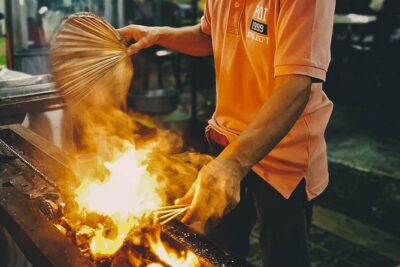
Sambal Streets Kuala Lumpur Food Tour with 15+ Tastings
Read our review →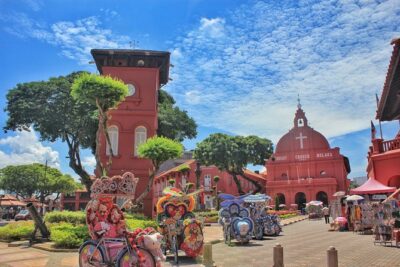
Historical Malacca Guided Day Tour (Shared Tour)
Read our review →


Genting Highland & Batu Cave Guided Day Tour (SIC/Shared Tour)
Read our review →
Browse the lists this tour appears in