Reviewed · KUALA LUMPUR TOURS
Kuala Lumpur Cultural and Heritage Tour
Kuala Lumpur’s story comes into focus through its places of worship. In about three hours, you move from a Chinese Buddhist temple to a Taoist shrine, a historic mosque, and a Hindu temple, then finish among the city’s best-known colonial buildings. The unusual part is the mix: these sites sit within one compact city, yet each has its own symbols, colors, and community roots.
I like the private hotel pickup and drop-off, which saves you from sorting out Kuala Lumpur traffic and makes this an easy first-day outing. I also like the six-stop variety. You get a quick look at several faiths and architectural styles rather than spending the whole morning on one attraction.
The catch is important: this is a driver-led tour, not a guided walking tour. Your English-speaking driver navigates and provides transport, but detailed historical explanations are not included. One published rating specifically described the experience as feeling like a taxi ride between sites, with little background information, so bring your own curiosity and do not expect a full cultural lecture.
Key points to know before booking
- Six heritage stops in roughly three hours: Plan on about 20 minutes at each site, with the actual timing shaped by traffic and transfers.
- Private transport: Only your group participates, and an air-conditioned vehicle takes you between the locations.
- No tour guide included: The driver speaks English, but the experience does not promise guided interpretation at each temple or landmark.
- Strong first-day overview: You see Buddhist, Taoist, Muslim, Hindu, and colonial Kuala Lumpur in one short outing.
- Free admission at the listed stops: The $19.99 price mainly pays for private transportation, hotel transfers, and convenience.
- Easy cancellation window: You receive a full refund if you cancel at least 24 hours before the start time.
What this three-hour tour really offers
This experience works best as an introduction to Kuala Lumpur, not as a detailed study of its past. The route gathers six important places, and each stop is short. That lets you see a lot, but it also means you will not have time to linger over every carving, prayer hall, or historical detail.
The private format gives you more control than a large coach outing. You are not sharing the vehicle with other groups, and hotel pickup and drop-off remove two common hassles in Kuala Lumpur. The air-conditioning matters in a warm city, especially when you are moving between outdoor courtyards and religious buildings.
The price is modest at $19.99 per person. Since admission is listed as free at each stop, think of the cost as payment for the vehicle, the driver, the route planning, and the door-to-door service. That is fair value if you want a simple overview and do not want to arrange six separate rides.
It is less convincing value if your main goal is historical explanation. The experience does not include a dedicated guide, and one rating of the tour made that exact complaint. You may see beautiful buildings without learning why every figure, roof ridge, or altar matters.
A few more trips around Kuala Lumpur worth a look
- Kuala Lumpur: Batu Caves Half-Day Tour with Pick-Up Option
★ 4.5 · 4,288 reviews - Private Half-Day Batu Caves and Cutural Tour in Kuala Lumpur
★ 5.0 · 3,107 reviews - Sambal Streets Kuala Lumpur Food Tour with 15+ Tastings
★ 5.0 · 2,438 reviews
Chan See Shu Yuen Temple and its decorated roofs
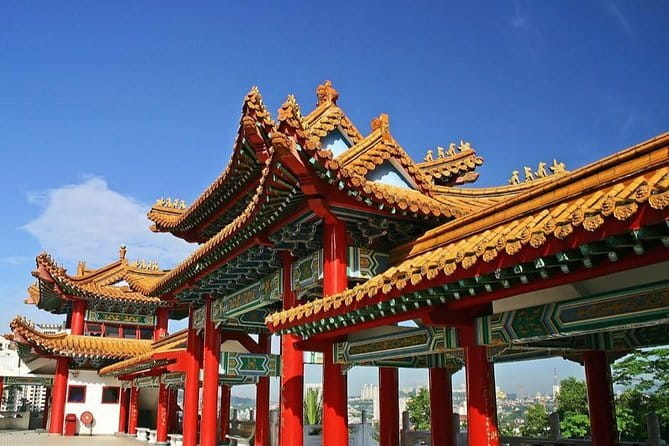
Your first stop is Chan See Shu Yuen Temple, one of Malaysia’s oldest and largest Buddhist temples. Construction took place between 1897 and 1906, and the building was created for an association connected with the Chan, Chen, and Tan clans.
The layout is carefully balanced. Several pavilions sit in a symmetrical arrangement, with colorful paintings and wooden bas-reliefs adding detail at eye level. Look upward and you will find elaborate ceramic roofs, wavy gables, and blue and green ceramic friezes.
The decoration is not limited to broad splashes of color. Mythological scenes appear in the ceramic work, while blue ceramic vases decorate the corners. At the entrance, a male and female guardian greet you. The central altar contains statues connected with the temple’s three founders.
You receive about 20 minutes here, enough to see the main details and take in the layout. It is not enough for a slow study of every carving. If you care about religious art, use your time to look at the roof edges, guardian figures, and altar rather than trying to inspect the entire complex.
Thean Hou Temple, a newer building with an old style
Thean Hou Temple gives you a useful contrast. It looks traditional, but it was built between 1981 and 1987. Up close, the ornate facade reveals a modern structure beneath the traditional design.
The temple spreads across six tiers, making it one of the larger stops on the route. It is managed by Malaysia’s Hainanese community, whose ancestors came from Hainan, China, with a background connected to seafaring and fishing.
That community connection adds meaning to the visit. You are not just looking at decorative architecture. You are seeing how a Chinese Malaysian group maintains a religious and cultural center in modern Kuala Lumpur.
Again, the planned time is about 20 minutes. The short stop gives you a chance to understand the building’s scale and style, but the lack of a dedicated guide means you will need to connect the architectural clues yourself. If the driver does not provide much background, pay attention to the contrast between the temple’s traditional appearance and its relatively recent construction.
Sin Sze Si Ya Temple and a different Chinese tradition
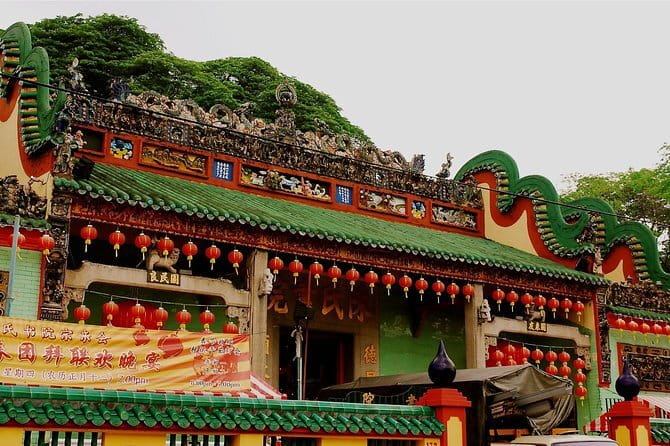
Sin Sze Si Ya Temple is described as the oldest Taoist temple in Kuala Lumpur, with a history dating to 1864. That makes it one of the most historically important stops on the route, even though its compact setting may feel less grand than Thean Hou Temple.
Inside, you can expect ornate decoration and an elaborate roof ridge. The temple honors the deities Sin Sze Ya and Si Sze Ya. Its unusual position and angle also make it different from the more formally arranged Chan See Shu Yuen Temple.
This stop is useful because it broadens the Chinese religious picture. The route does not show you one generic version of Chinese culture. It includes a Buddhist temple and a Taoist temple, each with its own history and visual language.
The 20-minute visit calls for quick attention. Look for the roof details and the interior ornament, then note how the temple’s unusual angle affects the way it fits into its surroundings. Since no guide is included, do not count on a detailed explanation of the two deities or the temple’s position.
Same base, a different sort of day:
- Historical Malacca Guided Day Tour (Shared Tour)
★ 5.0 · 2,172 reviews - Kuala Lumpur: Sambal Street Food Tour with 15+ Tastings
★ 4.9 · 1,657 reviews - From Kuala Lumpur: Batu Caves Cultural Temple Tour
★ 4.7 · 1,453 reviews - Genting Highland & Batu Cave Guided Day Tour (SIC/Shared Tour)
★ 5.0 · 1,289 reviews
Jamek Mosque at the Klang and Gombak rivers
Jamek Mosque, formally Sultan Abdul Samad Jamek Mosque, brings Muslim heritage into the route. It sits at the meeting point of the Klang and Gombak rivers and can be reached from Jalan Tun Perak.
The mosque was designed by Arthur Benison Hubback and built in 1909. Its Moorish architecture gives the exterior a different character from the Chinese temples earlier in the tour. It also occupies an important place in Kuala Lumpur’s religious history because it was built on the city’s first Malay burial ground.
Before Masjid Negara opened in 1965, Jamek Mosque served as Kuala Lumpur’s main mosque. That fact gives the building importance beyond its appearance. You are looking at a former center of the city’s Muslim life, not simply a photogenic structure.
The visit lasts about 20 minutes. The tour information does not specify entry rules, dress requirements, or whether the interior can be visited, so plan to follow any instructions given at the site. Your driver can get you there, but no guide is promised to explain the mosque’s design or history in detail.
Sri Maha Mariamman Temple and the city’s Hindu heritage
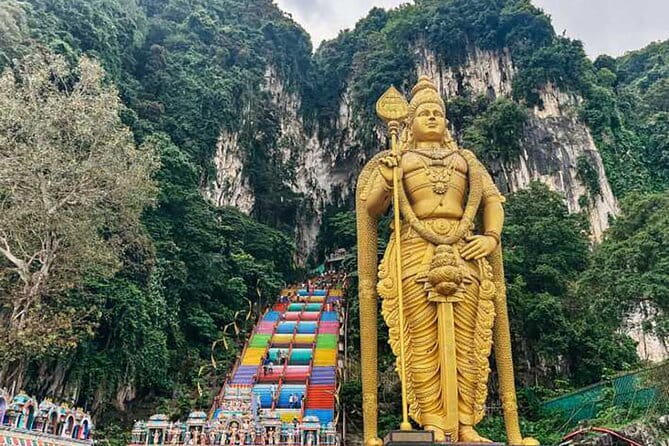
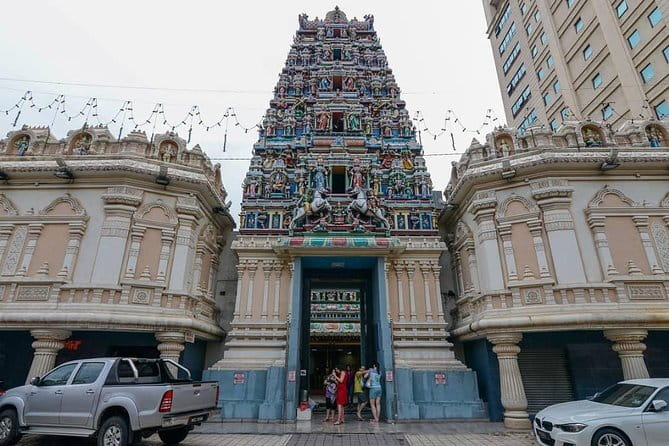
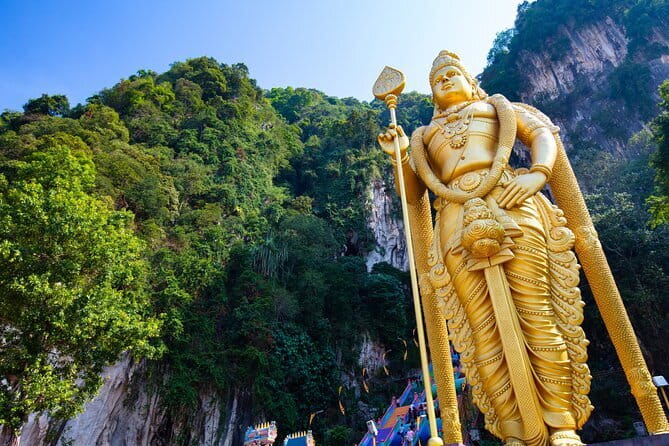
Sri Maha Mariamman Temple is one of Kuala Lumpur’s oldest Hindu temples. Its most eye-catching feature is the 22-meter-high gateway tower and portico, covered with intricately carved images of Hindu deities.
Inside, the temple houses images of the goddess Maha Mariamman decorated with gold and precious stones. The atmosphere is also part of the experience. Jasmine garlands sold by peddlers and the scent of incense bring the setting to life in a way that a quick exterior photo cannot.
Give this stop your full attention. The carvings on the gateway are easy to notice, but the smaller sensory details help you understand that this is an active religious place, not only a historic monument. Be respectful around worshippers and religious objects, even though the tour description does not spell out site-specific etiquette.
The 20-minute schedule is enough for a first look. If you want to study every figure on the tower, you will probably wish for more time. Still, this is one of the route’s strongest stops for showing how Kuala Lumpur’s Hindu community has shaped the city.
Sultan Abdul Samad Building and Dataran Merdeka
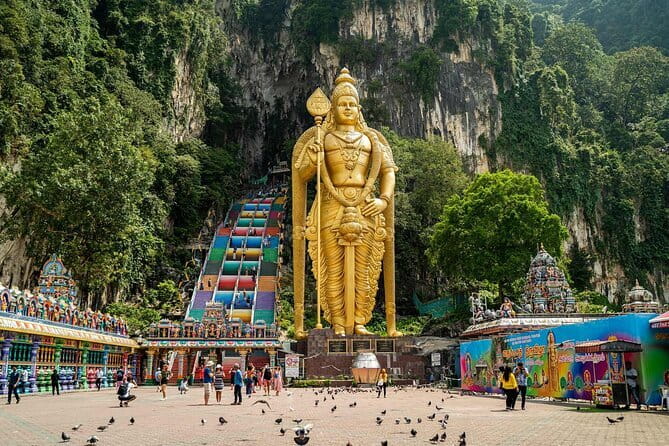
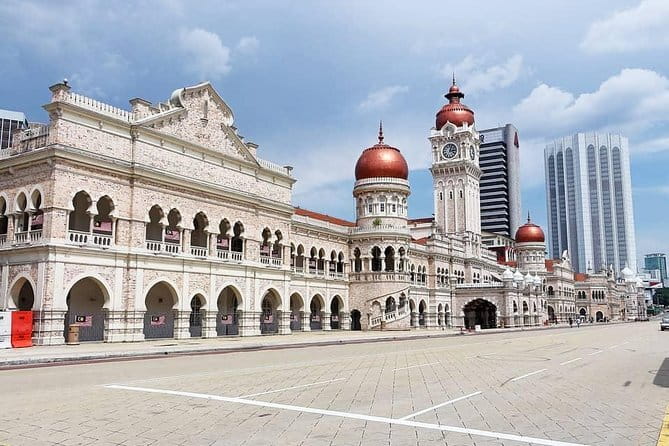
The final stop is the Sultan Abdul Samad Building, one of central Kuala Lumpur’s most photographed landmarks. It faces Dataran Merdeka and is recognized by its Moorish design and clock tower.
The building houses the Supreme and High Courts. Its formal facade gives the tour a change of pace after the temples and mosque. Here, the focus is civic and colonial architecture rather than an active place of worship.
You have about 20 minutes to view the building and its setting. This is a good place to connect the earlier religious sites with the wider story of Kuala Lumpur as a city shaped by Malay, Chinese, Indian, Muslim, Hindu, Buddhist, Taoist, and colonial influences.
The stop is especially useful for first-time visitors because it places you in the city center and gives you a recognizable landmark. Still, the tour does not promise a detailed account of the building’s legal or political history. You will mainly receive the visual introduction and the chance to photograph the facade.
Why the private vehicle matters in Kuala Lumpur
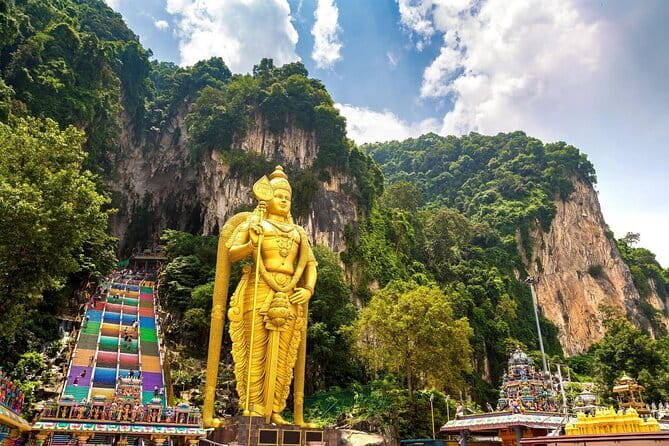
Kuala Lumpur’s attractions are not all gathered in one small pedestrian zone. A private, air-conditioned vehicle makes this short route practical. You are picked up at your hotel, taken between the sites, and returned afterward.
The driver is responsible for navigation, which is useful when you want to cover six stops without working out every transfer yourself. The private setup also means only your group participates. That can make the day feel less rigid than a large group excursion, although the supplied details do not promise a flexible, custom itinerary.
The driver speaks English, but that should not be confused with having a guide. The distinction affects the whole experience. You get a person who can manage the route and transport, but not necessarily someone who will explain temple symbolism, religious practice, or architectural history at every stop.
If you want context, read a little about the sites before departure or keep a note on your phone with the key facts. That small effort can make the same three-hour route much more rewarding.
Who will get the most from the $19.99 price
I would recommend this tour to a first-time visitor who wants a quick orientation to Kuala Lumpur’s cultural landmarks. It also suits anyone who values hotel pickup, air-conditioning, and a private vehicle more than a long guided explanation.
The price makes sense for solo visitors, couples, or small groups who would otherwise need to arrange transport to six separate sites. Group discounts are available, though the exact discount is not provided, so check the price for your party before booking.
Families and mixed-interest groups may also like the format because the route keeps moving. You can sample several traditions without committing to a full-day museum or temple visit.
I would be more cautious if you are passionate about architecture, religion, or local history. The 20-minute stops are brief, and the missing guide is a real limitation. One published rating gave the overall experience three out of five and described it as transportation from place to place without enough background. That is a fair warning, not a reason to reject the tour outright.
Practical details before you go
The tour lasts approximately three hours and includes hotel pickup and drop-off in an air-conditioned vehicle. Confirmation is provided when you book, and a mobile ticket is available.
Admission is listed as free at all six stops. Food and drinks are not included, and there is no dedicated tour guide. Most people can participate, and the activity is private to your group.
The tour is usually booked about nine days ahead, which gives you a rough idea of planning time, though you should still confirm your preferred date. Free cancellation applies when you cancel at least 24 hours before the local start time. Within 24 hours, the payment is not refunded, and changes are not accepted.
Should you book the Kuala Lumpur Cultural and Heritage Tour?
Book it if you want a low-cost, private introduction to Kuala Lumpur’s religious and civic landmarks, especially with hotel transport included. The route gives you an impressive range of buildings in a short period, from the 19th-century Chinese temples and 1909 mosque to a modern temple built in the 1980s and the famous Sultan Abdul Samad Building.
Skip it if you expect a fully narrated cultural tour. The driver handles the route, but a guide is not included, and the short stops leave little room for detailed explanation. For the right buyer, this is a convenient sightseeing circuit. For a history-focused visitor, it is better used as a first look, followed by independent visits or reading.
FAQ
How long does the Kuala Lumpur Cultural and Heritage Tour last?
The tour lasts approximately three hours.
What sites are included?
The route includes Chan See Shu Yuen Temple, Thean Hou Temple, Sin Sze Si Ya Temple, Jamek Mosque, Sri Maha Mariamman Temple, and the Sultan Abdul Samad Building.
Is hotel pickup included?
Yes. Hotel pickup and drop-off are included.
Is transportation air-conditioned?
Yes. Transport is provided in an air-conditioned vehicle.
Is this a private tour?
Yes. Only your group participates in the activity.
Is a tour guide included?
No. An English-speaking driver is included, but a dedicated tour guide is not.
Are admission fees included?
Admission is listed as free at all six stops.
Are food and drinks included?
No. Food and drinks are not included unless specified.
Can I cancel for a full refund?
Yes, if you cancel at least 24 hours before the experience start time. Cancellations made within 24 hours are not refunded, and changes made within that period are not accepted.
Just added around Kuala Lumpur
- Transit Tour Private Tour (Ex Port Klang Cruise Centre/KLIA 1 &2)★ 5.0 · 10 reviews
- Sunway Lagoon Ticket (One Day Pass)★ 3.5 · 5 reviews
- Private Kuala Lumpur Shore Excursions★ 4.5 · 22 reviews
- Private Transfer: Kuala Lumpur International Airport to or from Hotel★ 4.5 · 14 reviews
- Kuala Lumpur City & Batu Caves Temple Private Tour★ 4.5 · 3 reviews
- Full Day Melaka Private Tour from Kuala Lumpur★ 4.0 · 5 reviews
- Private Port Klang Cruise to Kuala Lumpur City Tour★ 5.0 · 3 reviews
- Kuala Lumpur Airport Transit Tour (4 hours)★ 5.0 · 12 reviews
Kuala Lumpur Tours, compared.
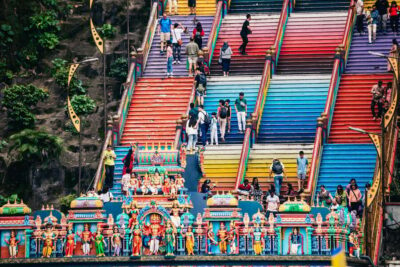
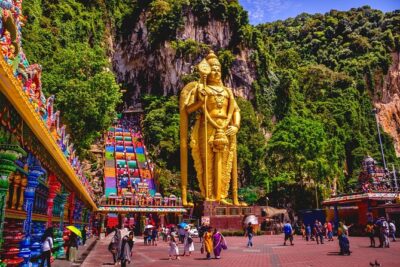
Private Half-Day Batu Caves and Cutural Tour in Kuala Lumpur
Read our review →
Sambal Streets Kuala Lumpur Food Tour with 15+ Tastings
Read our review →
Historical Malacca Guided Day Tour (Shared Tour)
Read our review →
Genting Highland & Batu Cave Guided Day Tour (SIC/Shared Tour)
Read our review →