
Reviewed · KOTA KINABALU TOURS
Mari-Mari Cultural Village Half Day Tour
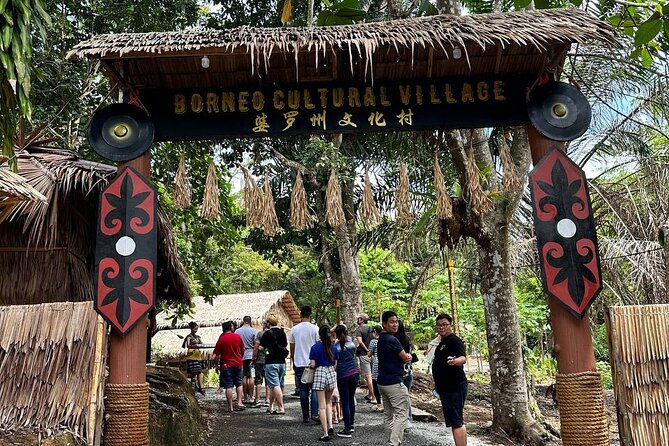
Mari-Mari Cultural Village gives you a quick, lively introduction to Sabah’s five major indigenous groups without sending you far from Kota Kinabalu. The visit moves through traditional houses, cooking demonstrations, local drinks, crafts, and a stage performance, so you get both explanation and hands-on details.
I like the small maximum group of 15, which should make it easier to hear the guide and see the demonstrations. I also like that the price includes air-conditioned transport, entry, food samples, a buffet lunch, and hotel pickup within Kota Kinabalu. The main point to consider is the staged nature of the attraction: it offers a useful introduction, but it is not the same as visiting an active village community.
Key points to know
- Five Sabah cultures in one visit: See representations of Kadazan-Dusun, Rungus, Lundayeh, Bajau, and Murut traditions.
- Two departure choices: Pickup begins around 9:00 a.m. for the morning session or 1:00 p.m. for the afternoon session.
- Food is part of the lesson: Sample traditional snacks, desserts, drinks, and house-brewed rice wine.
- A performance closes the cultural program: Traditional Sabah dance and other prepared shows run before lunch.
- Lunch is included: The tour ends with a local Malaysian buffet-style meal.
- Good for families: The mix of demonstrations, food, houses, and music keeps the visit varied rather than lecture-heavy.
Why Mari-Mari works as a first look at Sabah
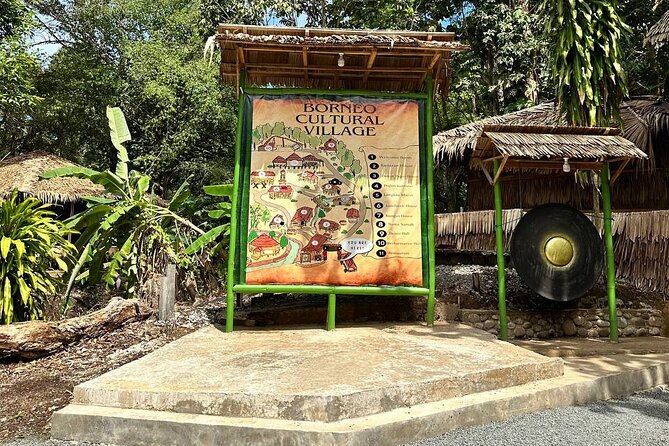
Sabah is home to many Indigenous communities, and their customs can be difficult to understand from a hotel district or a city museum. Mari-Mari Cultural Village brings several traditions together in one forest setting near Kionsom, in Inanam, roughly 30 minutes from Kota Kinabalu.
That format is useful if you have limited time. You will not need separate trips to different parts of Sabah to get a basic sense of how several communities lived, built homes, prepared food, and marked important occasions.
I see the attraction as an introduction rather than a complete portrait of Indigenous life. The houses and demonstrations are arranged for visitors, and the program follows a set schedule. That makes the experience easy to follow, but it also means you should treat it as a cultural presentation, not an unplanned encounter with everyday village life.
The strongest feature is variety. In one half-day, you may move from a Dusun house to a Rungus house, learn about Lundayeh traditions, see elements of Bajau and Murut culture, sample food, and watch a performance. For a first visit to Sabah, that range gives you useful context for the rest of your trip.
A few more trips around Kota Kinabalu worth a look
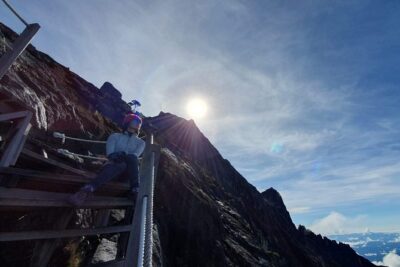
- 2D1N Mount Kinabalu Climbing
★ 5.0 · 494 reviews - Bongawan River Cruise: Proboscis Monkey & Fireflies Mangrove
★ 4.8 · 437 reviews - Guided Snorkeling Day Trip, Kota Kinabalu, Sabah, Malaysia
★ 5.0 · 282 reviews
The 30-minute ride from Kota Kinabalu
Pickup is offered from hotels in Kota Kinabalu City. The vehicle is air-conditioned, a welcome detail in Sabah’s warm climate, and the drive to the village takes about 30 minutes.
The guide begins setting the scene on the way. One especially useful part of the ride is the overview of Sabah’s politics and culture, which gives you a framework before you arrive. That can make the house demonstrations easier to understand because you are not meeting each community as a disconnected display.
Pickup timing depends on your selected session and hotel. For the morning option, collection begins around 9:00 a.m., with the cultural program starting at 10:00 a.m. The afternoon option begins with pickup around 1:00 p.m., followed by the program at 2:00 p.m.
If your accommodation is outside the Kota Kinabalu city hotel area, pickup and drop-off may cost an additional MYR30. Check that detail before booking, since the advertised price does not cover every outlying hotel.
Welcome ceremony and the first look inside
The visit begins with a welcome ceremony before you enter the cultural village. This sets the tone for the program and gives the staff a chance to introduce the cultural setting.
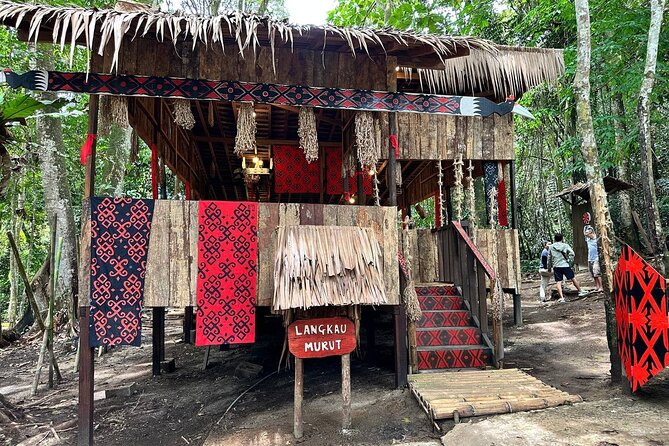
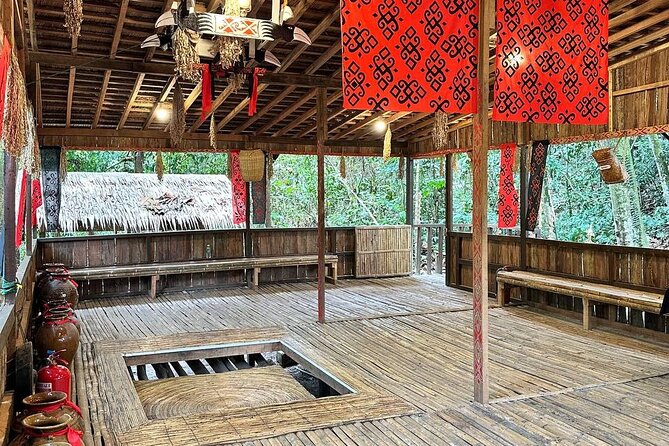
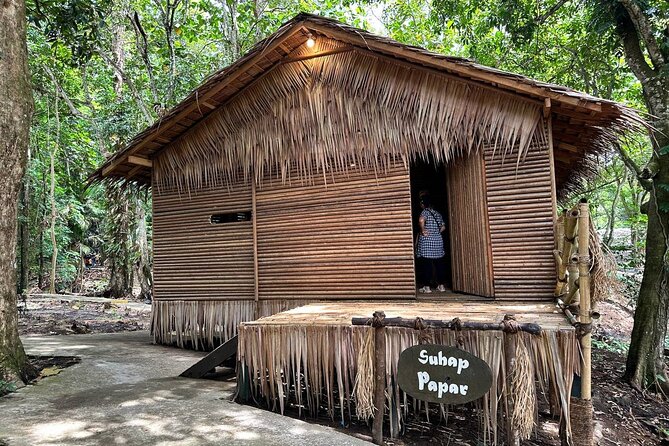
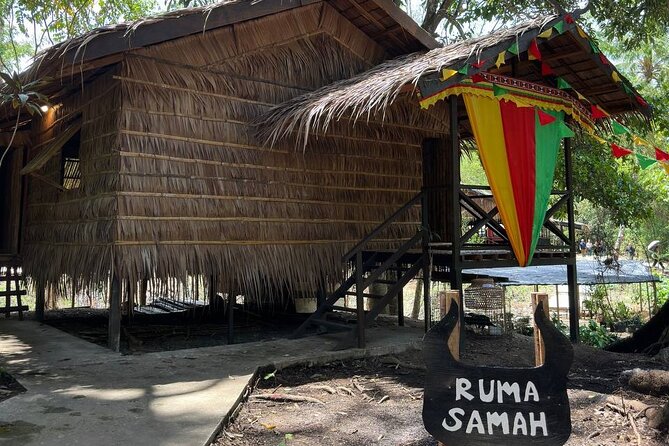
The main house visits follow. You will see representations of homes connected with the Dusun, Lundayeh, and Rungus communities, along with demonstrations linked to local customs and daily life. The exact flow can vary, but the central idea remains the same: each house presents a different building style, domestic practice, or tradition.
This part is strongest when you pay attention to the practical details. Look at how the houses are arranged, listen for explanations of materials and household use, and compare one structure with the next. The value is not simply in seeing an old-style building. It is in noticing how housing reflects climate, community habits, and available resources.
The program is also designed to keep children involved. A family can move from looking at a house to watching a demonstration, then try a small food sample or craft activity. That change of pace helps prevent the experience from feeling like a long museum talk.
Food, rice wine, and local demonstrations
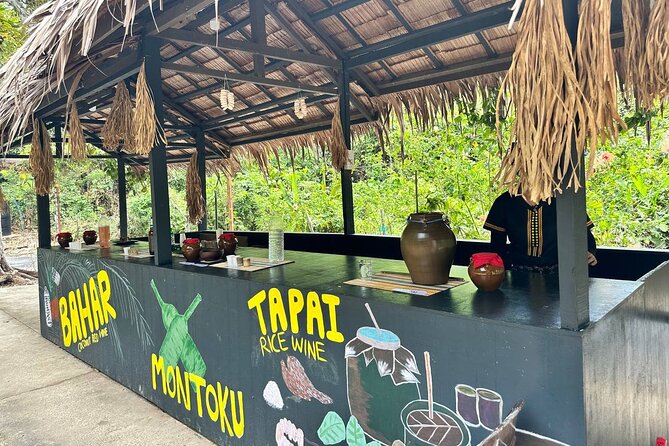
Food is not an afterthought here. During the house visits, you can sample traditional light foods, desserts, and drinks. House-brewed rice wine is also part of the tasting experience.
These samples add a useful sensory layer to the visit. A description of a food tradition is easy to forget, but tasting something connected with the community gives the explanation more meaning. If you do not drink alcohol, you can simply ask about the rice wine or decline the sample.
Cooking and alcohol-making demonstrations are included among the activities. The details are presented as part of the cultural program, so you get a practical look at how ingredients and household methods fit into local traditions.
I would not book this tour solely for a large meal or extended food tour. The tasting portions are part of a wider visit, not the main event. Still, they are a pleasant addition, and the combination of small samples followed by a proper lunch gives the day a clear rhythm.
Same base, a different sort of day:
- Bongawan Wetland: Proboscis Monkey and Fireflies Shared Tour
★ 4.2 · 137 reviews - Borneo (Klias) River Cruise & Fireflies Tour
★ 4.5 · 126 reviews - Sky-Mirror Photographing and Proboscis Monkey & Fireflies Watching River-Cruise
★ 4.0 · 109 reviews - Full-Day Guided Snorkeling Tour from Kota Kinabalu
★ 4.6 · 101 reviews
Traditional dance before the final meal
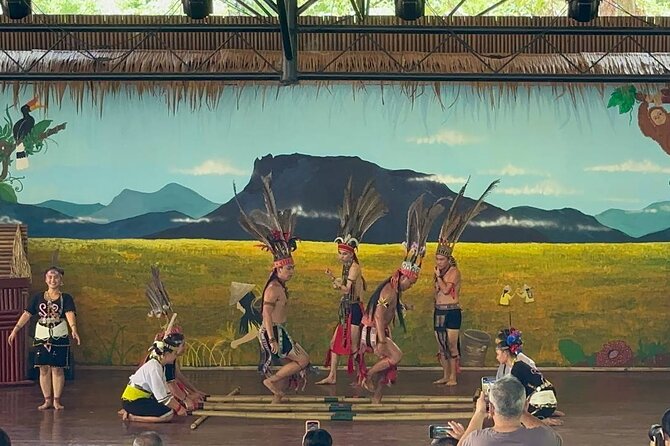
The scheduled performance is one of the main attractions. In the morning session, traditional Sabah dance runs roughly from 11:45 a.m. to 12:30 p.m. In the afternoon session, it runs from about 3:45 p.m. to 4:30 p.m.
The performance gives you a more public and celebratory side of Sabah culture after the quieter house demonstrations. Music, movement, and costumes make the material easier to remember, especially for children and anyone who learns better by watching than by listening.
The show is prepared for the cultural village, so it is clearly a performance rather than an informal village gathering. That is not a flaw, but it is worth knowing. You are seeing a polished presentation designed to explain and entertain.
I like the placement in the schedule. By this point, you have already seen the houses and sampled food, so the performance feels like a lively final chapter to the cultural portion of the visit. In bad weather, the program may be affected, since the experience requires suitable conditions.
Malaysian buffet lunch in a forest setting
Lunch follows the performance. The morning group eats around 12:45 p.m., while the afternoon group eats around 4:45 p.m. A local Malaysian buffet-style meal is included in the price.
The setting adds to the meal. You eat surrounded by the forest environment rather than returning immediately to the city. The lunch gives you time to slow down after the demonstrations and performance, and it makes the half-day price easier to justify.
The afternoon schedule deserves a little thought. Lunch at around 4:45 p.m. is closer to an early dinner than a midday meal. If you choose the afternoon departure, plan your meals accordingly. The morning option is better if you prefer a conventional lunch hour and want the rest of the day free.
The information provided does not list individual dishes, so I would not book this expecting a specific menu. The useful point is that food is included and presented in a local Malaysian style, rather than requiring you to arrange a separate meal.
Is the $85.79 price good value?
At $85.79 per person, the tour is not the cheapest way to spend a morning or afternoon near Kota Kinabalu. Its value comes from what is bundled together.
Your price covers entry, air-conditioned transport, hotel pickup and drop-off within the city hotel area, the house visits, demonstrations, cultural activities, dance, food samples, and a buffet lunch. If you would otherwise pay separately for transportation and admission, the package becomes more attractive.
The small group limit also matters. A maximum of 15 people is more manageable than a large coach group. You should have a better chance of hearing explanations and seeing demonstrations without standing far back.
I would consider it good value for a first-time visitor who wants an organized cultural introduction and does not have time for a longer trip into Sabah. It is less compelling if you prefer independent travel, dislike staged performances, or already have several days planned around Indigenous communities and local food.
The tour is also easy to fit into a short Kota Kinabalu stay. The morning session ends around 1:30 p.m., leaving much of the afternoon available. The afternoon session ends around 5:30 p.m., so it works well if your morning is occupied.
Who will enjoy this half-day visit
Families are a natural fit. The program offers enough movement and variety to hold a child’s attention: houses, food, demonstrations, music, and a performance. The educational content is present, but it is delivered through activities rather than a long classroom-style talk.
First-time visitors to Sabah will also get a lot from it. You can learn the names of five major Indigenous groups and see several cultural traditions in a single outing. That broad introduction can help you decide which parts of Sabah you would like to explore in greater depth later.
The tour suits anyone who values convenience. Hotel pickup, a fixed schedule, included admission, and lunch remove much of the planning work. You also avoid arranging separate transport to an attraction outside the central city.
I would be more cautious if you want a quiet, private encounter. The village follows a group program, and the dance show and demonstrations are built for an audience. The maximum group of 15 is fairly modest, but it is still a shared experience.
Timing, weather, and practical planning
You can choose between morning and afternoon sessions, but the two options feel different. Morning pickup starts around 9:00 a.m., the cultural program begins at 10:00 a.m., and lunch comes at about 12:45 p.m. The tour ends around 1:30 p.m.
The afternoon option starts with pickup around 1:00 p.m. The program begins at 2:00 p.m., the performance runs from about 3:45 p.m. to 4:30 p.m., lunch comes around 4:45 p.m., and the tour ends near 5:30 p.m.
Wear comfortable clothing and shoes suitable for walking between the houses. The supplied information does not specify a dress code or detailed terrain, so you should not assume every part is indoors. The forest setting and weather requirement suggest carrying sensible protection from sun or rain.
The experience is described as suitable for most people. Confirmation is sent within 48 hours of booking, subject to availability. If the minimum number of participants is not reached, the operator may offer another date or experience, or provide a full refund.
Free cancellation is available up to 24 hours before the start time. A cancellation made less than 24 hours in advance is not refunded, and changes are not accepted inside that window. If poor weather cancels the activity, you can choose another date or receive a full refund.
My verdict: book it for the broad introduction
I would book Mari-Mari Cultural Village if I had a short stay in Kota Kinabalu and wanted one organized outing that combined culture, food, performance, and transport. The five-house format, small group limit, and included lunch give the visit more substance than a quick photo stop.
I would choose the morning session for a normal lunch hour and a free afternoon. I would choose the afternoon session if I wanted a slower morning, while keeping in mind that lunch comes late.
The best match is a family, first-time visitor, or anyone who wants a clear introduction to Sabah’s Indigenous cultures. If you are seeking a deeply personal village visit or independent contact with local communities, you may find the staged format too polished. For a convenient and engaging starting point, though, this is a sensible choice.
FAQ
Where is Mari-Mari Cultural Village?
It is in Kionsom, Inanam, about 30 minutes from Kota Kinabalu.
How long does the tour last?
The experience lasts approximately 4 hours and 30 minutes, including pickup, the cultural program, lunch, and return transfer.
Are morning and afternoon sessions available?
Yes. The morning schedule begins with pickup around 9:00 a.m. and starts at the village around 10:00 a.m. The afternoon schedule begins with pickup around 1:00 p.m. and starts around 2:00 p.m.
Which Indigenous cultures are represented?
The village presents traditions connected with the Kadazan-Dusun, Rungus, Lundayeh, Bajau, and Murut communities.
Is lunch included?
Yes. A local Malaysian buffet-style lunch is included, along with light food and drink samples during the house visits.
Is hotel pickup included?
Pickup and drop-off are included for Kota Kinabalu City hotels. Outlying hotels may incur an additional MYR30 charge.
Can I cancel for a full refund?
Yes, if you cancel at least 24 hours before the experience start time. Cancellations made less than 24 hours in advance are not refunded.
Just added around Kota Kinabalu
- Sabah: White Water Rafting Grade 3-4 at Padas River★ 4.7 · 3 reviews
- Full-Day Sepilok Orangutan and Sandakan City Trail from Kota Kinabalu★ 4.0 · 6 reviews
- Island Hopping ( Manukan & Sapi Island ) From Kota Kinabalu★ 4.5 · 9 reviews
- Monsopiad Cultural Village Visit with Private Transfer from Kota Kinabalu★ 4.5 · 5 reviews
- Sunset E-Foil Experience in Tanjung Aru Beach★ 5.0 · 10 reviews
- Mangrove Kayaking Experience in Borneo★ 5.0 · 8 reviews
- Join us for a RAID Try Dive in Kota Kinabalu★ 5.0 · 27 reviews
- Padas River White Water Rafting from Kota Kinabalu (Grade 3 & 4)★ 3.5 · 4 reviews
Kota Kinabalu Tours, compared.

Bongawan River Cruise: Proboscis Monkey & Fireflies Mangrove
Read our review →
Guided Snorkeling Day Trip, Kota Kinabalu, Sabah, Malaysia
Read our review →
Bongawan Wetland: Proboscis Monkey and Fireflies Shared Tour
Read our review →

Sky-Mirror Photographing and Proboscis Monkey & Fireflies Watching River-Cruise
Read our review →
Full-Day Guided Snorkeling Tour from Kota Kinabalu
Read our review →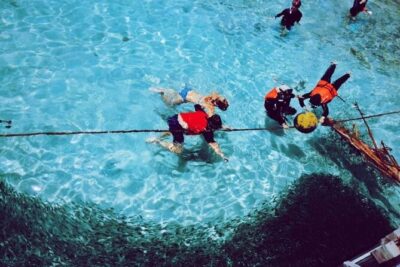
Browse the lists this tour appears in